The Rural Credentialing Crisis: Why Remote Healthcare Facilities Face 3x Longer Onboarding Times
How geography is turning credentialing into the ultimate barrier to closing America's rural healthcare gap

The Rural Credentialing Crisis: Why Remote Healthcare Facilities Face 3x Longer Onboarding Times
There are 62 million Americans living in rural communities—nearly 20% of the U.S. population—served by less than 10% of the nation's physicians. The math is brutal. But here's what nobody talks about: even when rural hospitals find willing clinicians, the credentialing process actively works against getting them on the floor.
While urban health systems have streamlined their credential verification into 30-day turnarounds, rural facilities routinely see 90+ day onboarding cycles. That's not just inefficient. It's catastrophic for communities where a single unfilled position means ambulance diverts and shuttered departments.
The Rural Credentialing Paradox
Rural healthcare credentialing faces a cruel irony: the facilities most desperate for clinicians are often the least equipped to process them quickly.
Limited Credentialing Staff
A 25-bed critical access hospital doesn't have a dedicated credentialing department. They have Mary in HR who also handles payroll, benefits, and compliance—and credentialing when she can get to it. This isn't a criticism of Mary. It's a recognition that small facilities lack the specialized infrastructure that urban academic medical centers take for granted.
State Board Complications
Rural facilities often sit in states with notoriously slow licensing boards. Montana, Wyoming, Alaska—the most rural states frequently have the smallest licensing teams processing the fewest applications with the longest turnaround times. A physician licensed in California might wait 16 weeks for Montana reciprocity while their would-be employer bleeds locum tenens costs.
Primary Source Verification Distances
When the nearest medical school is 500 miles away and the residency program closed in 2019, tracking down primary source verification becomes an archaeological expedition. Rural credentialers spend hours hunting for institutional contacts that urban counterparts access through integrated databases.
The Staffing Agency Squeeze
For healthcare staffing agencies, rural placements represent both their biggest margin opportunity and their most frustrating operational challenge.
Rural assignments often command premium rates—facilities are desperate and willing to pay. But the credentialing overhead can eat those margins alive:
- Extended credential cycles mean delayed revenue recognition
- State-specific requirements demand specialized knowledge
- Hospital-specific privileging adds layers for facilities without standardized processes
- Higher cancellation risk when clinicians drop assignments during lengthy waits
As the Staffing Industry Analysts (SIA) have consistently noted, operational efficiency is increasingly the differentiator between thriving and struggling healthcare staffing firms. Rural credentialing inefficiency is a direct hit to the bottom line.
Why Traditional Credentialing Approaches Fail Rural Healthcare
The "One Size Fits All" Problem
Most credentialing software was designed for large health systems processing thousands of providers. These platforms assume dedicated staff, established workflows, and integration with major VMS systems. Rural facilities using these tools often pay for 90% of features they'll never use while lacking the 10% they actually need—like intelligent primary source tracking for defunct institutions.
Paper Process Persistence
Urban hospitals went digital a decade ago. Many rural facilities still run on fax machines, physical file cabinets, and institutional knowledge locked in the heads of employees nearing retirement. This isn't resistance to technology—it's resource allocation. When you're choosing between a new CT scanner and credentialing software, the scanner wins every time.
Credentialing Committee Constraints
Rural hospital medical staff committees often meet monthly—or less. One missed document means 30+ additional days of delay. Urban systems with weekly committee reviews and automated provisional privileging pathways simply move faster by design.
Breaking the Rural Credentialing Bottleneck
AI-Powered Document Intelligence
Modern credentialing automation can transform the rural equation. When AI handles document extraction, verification routing, and expiration tracking, Mary in HR can focus on exceptions rather than drowning in routine processing. The technology exists to give small facilities large-system capabilities without large-system costs.
Cross-State Licensing Optimization
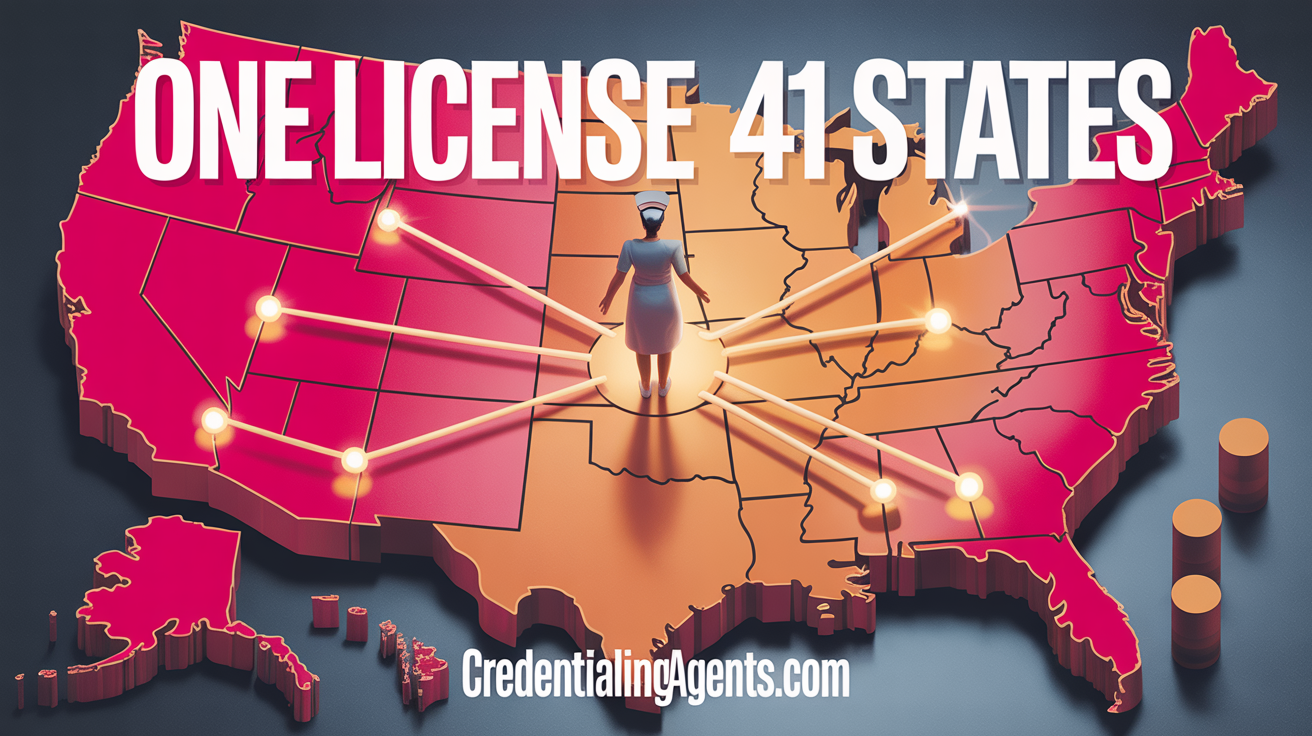
Strategic use of Interstate Medical Licensure Compact (IMLC) and Nurse Licensure Compact (NLC) can slash months off rural credentialing timelines. Agencies and facilities working together to identify compact-eligible clinicians and prioritize their placement can dramatically accelerate access to care.
Delegated Credentialing Relationships
Rural facilities that establish delegated credentialing agreements with their staffing partners can collapse weeks of redundant verification. When the staffing agency's CVO conducts the primary source verification and the hospital accepts it, everyone wins—especially the patient waiting for a provider.
Proactive Pipeline Building
Smart agencies are pre-credentialing providers for rural-heavy states before assignments materialize. Building a bench of Montana-licensed, Wyoming-licensed, and Alaska-licensed clinicians transforms 90-day placements into 14-day deployments.
The Stakes Are Getting Higher
Since 2010, over 130 rural hospitals have closed. Dozens more teeter on the edge. Each closure represents not just an economic loss but a healthcare desert expanding—patients facing longer drives to emergency care, obstetric services disappearing from entire counties, communities losing their safety net.
Faster credentialing won't solve rural healthcare's fundamental challenges. But it can stop being part of the problem. Every week shaved off onboarding is a week of coverage gained. Every placement accelerated is a community served.
The Path Forward
Rural healthcare credentialing doesn't need sympathy. It needs solutions built for its specific constraints:
- Lightweight technology that doesn't require dedicated IT staff
- Intelligent automation that handles the 80% routine so humans can focus on the 20% complex
- Compact-aware workflows that prioritize multi-state licensing advantages
- Delegated credentialing frameworks that eliminate redundant verification
- Proactive expiration management that prevents rural placements from lapsing mid-assignment
The 62 million Americans in rural communities deserve healthcare access that doesn't depend on how fast paperwork moves. The technology to make that happen exists today.
Ready to cut rural credentialing times in half? CredentialingAgents.com builds AI-powered credentialing automation specifically designed for the realities of healthcare staffing—including the unique challenges of rural placement. No massive implementation. No enterprise pricing. Just faster credentialing for agencies that need to move.