The 23-Day Problem: How Credentialing Delays Are Costing Healthcare Staffing Agencies Millions
Every healthcare staffing agency knows the frustration: a qualified nurse is ready to work, a facility desperately needs coverage, but the assignment sits in limbo. The culprit? Credentialing delays.
The average time to credential a healthcare professional in the United States is 23 days. For travel nurses and allied health professionals, it can stretch to 30-45 days. In an industry where unfilled shifts cost hospitals an average of $4,000-$7,000 per day, those weeks of waiting translate to staggering losses.
The Real Cost of Manual Credentialing
Let's do the math:
- Average credentialing time: 23 days
- Average daily bill rate for a travel nurse: $1,800
- Lost revenue per delayed placement: $41,400
- If your agency delays just 10 placements per month: $414,000 in lost revenue annually
But the financial bleeding doesn't stop there. Consider:
- Credentialing coordinator salaries: $45,000-$65,000 per coordinator
- Primary source verification fees: $15-$50 per verification
- State license verification backlogs: 5-15 business days per state
- Expired credential tracking: Manual spreadsheets that inevitably miss renewals
Why Traditional Credentialing Fails
The healthcare credentialing process was designed in an era of fax machines and paper files. Today's staffing agencies are trying to meet 2026 demand with 1996 processes:
1. Primary Source Verification Bottlenecks
Every credential—licenses, certifications, education, work history—must be verified at the source. State boards respond in their own time. Schools dig through archives. Previous employers may no longer exist.
2. The Multi-State Nightmare
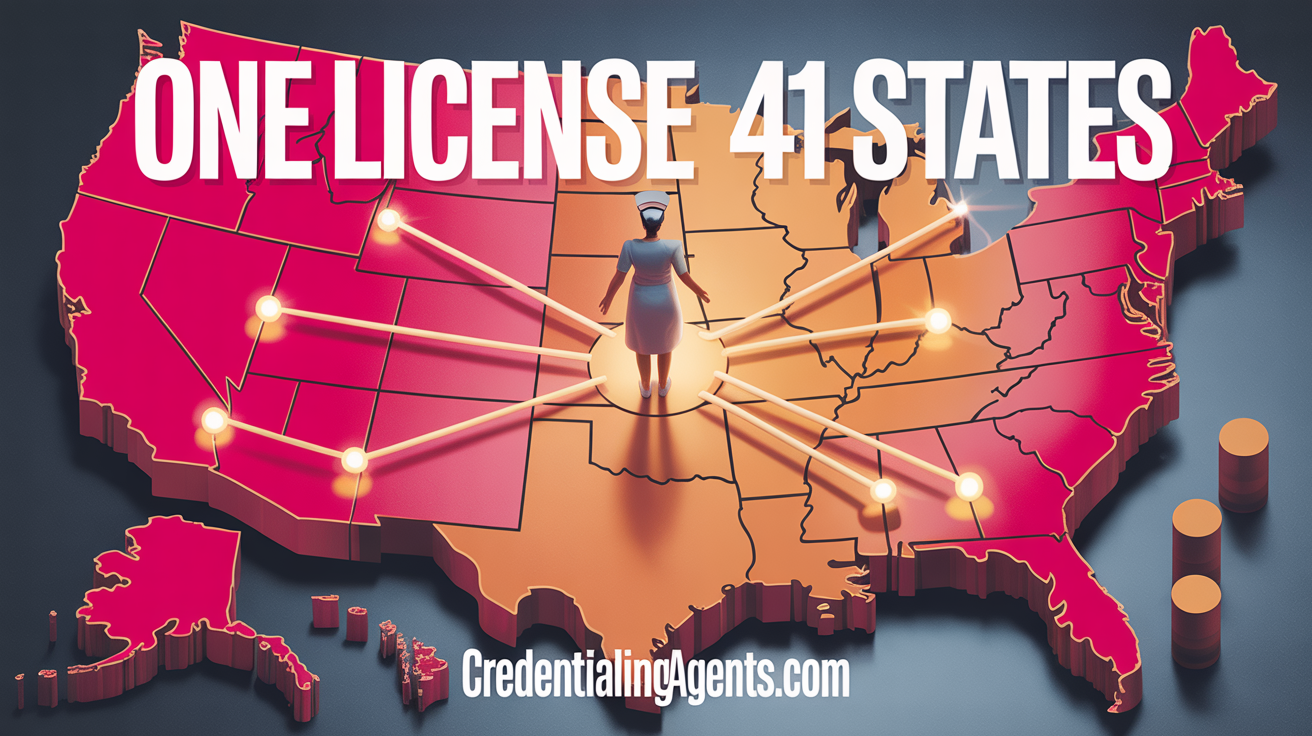
Travel nurses often hold licenses in 10+ states. Each state has different requirements, different portals, different response times. The Nurse Licensure Compact helps, but only covers 41 states—and facilities still require individual verification.
3. Compliance Complexity
Joint Commission standards. CMS requirements. Facility-specific policies. The average healthcare credential file requires 50-100+ individual verification points.
4. The Renewal Treadmill
Credentials expire. BLS certifications, state licenses, TB tests, flu shots—the calendar never stops. Miss one expiration, and your placed nurse gets pulled from assignment. Miss several, and you're facing compliance audits.
The AI Revolution in Healthcare Credentialing
Here's the good news: the 23-day problem is solvable.
AI-powered credentialing platforms are now achieving what seemed impossible:
- Automated primary source verification that runs 24/7, not just business hours
- Intelligent document extraction that reads licenses, certifications, and diplomas instantly
- Predictive expiration management that alerts you weeks before credentials lapse
- Multi-state license tracking with real-time status monitoring
- Compliance gap analysis that catches missing items before they become problems
Agencies using AI credentialing are reporting:
- 60-70% reduction in time-to-credential
- 85% decrease in compliance incidents
- 3-5x increase in credentialing throughput per coordinator
The Competitive Advantage of Speed
In healthcare staffing, speed wins. The agency that can credential and place a nurse fastest captures the assignment. The agency still shuffling paper loses—not just that placement, but potentially that facility relationship entirely.
Consider this scenario: A hospital needs 5 ICU nurses for a 13-week contract starting in two weeks.
- Agency A can credential and confirm all 5 nurses in 7 days using AI automation
- Agency B quotes 3-4 weeks using their traditional process
Who gets the contract? More importantly, who gets the next contract when that hospital needs coverage again?
What Modern Credentialing Looks Like
The best AI credentialing systems don't just speed up the old process—they reimagine it:
- Intake: Healthcare professional uploads documents once
- Extraction: AI reads and categorizes every document instantly
- Verification: Automated systems query state boards, schools, and certification bodies in real-time
- Gap Analysis: Missing items flagged immediately with automated outreach
- Monitoring: Continuous credential status tracking with proactive renewal alerts
- Compliance: Instant facility-specific compliance packets generated on demand
The result? What used to take 23 days now takes 5-7. What used to require 3 full-time coordinators now requires 1.
Taking Action
If your agency is still battling the 23-day problem, ask yourself:
- How many placements are you losing to credentialing delays?
- How much is manual verification costing in labor and fees?
- When was the last time a missed expiration caused a compliance incident?
- What would 70% faster credentialing mean for your competitive position?
The math is clear. The technology exists. The only question is whether you'll modernize before your competitors do.
Ready to solve your credentialing bottleneck? Credentialing Agents uses AI to automate primary source verification, track expirations, and cut credentialing time by 60-70%. See how agencies are eliminating the 23-day problem.