The AI Credentialing Revolution: Why 2026 Is the Year Healthcare Staffing Finally Breaks Free from Paper
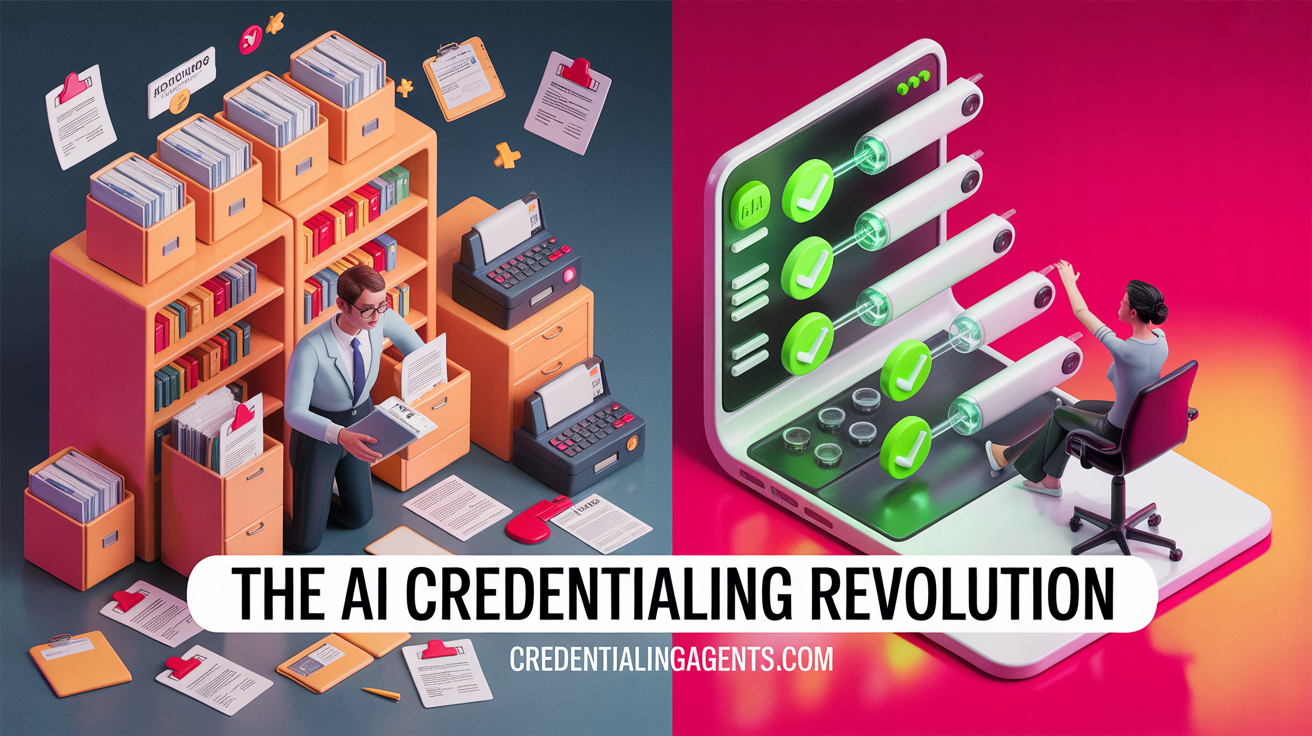
The healthcare staffing industry has a dirty secret: while hospitals deploy AI-powered surgical robots and diagnostic algorithms, their credentialing departments still run on fax machines, spreadsheets, and prayer.
That's finally changing.
The Credentialing Automation Tipping Point
According to Staffing Industry Analysts, healthcare staffing firms that invested in credentialing automation saw 40-60% reductions in time-to-placement in 2025. Barry Asin, SIA's Chief Analyst, has repeatedly emphasized that AI adoption in back-office operations—particularly credentialing—represents the biggest efficiency opportunity for healthcare staffing firms in this decade.
"The staffing firms winning market share aren't just the ones with the best recruiters. They're the ones who've automated the friction out of compliance and credentialing." — Industry analysis from Staffing Industry Analysts
This isn't just about speed. It's about survival.
Why Traditional Credentialing Is Broken
Let's be honest about what "credentialing" actually looks like at most staffing agencies:
- 80+ documents per clinician, scattered across email, fax, and paper files
- Manual verification calls to state boards, nursing schools, and previous employers
- Expiration tracking via spreadsheet (if you're lucky) or sticky notes (if you're not)
- 2-4 weeks minimum from candidate acceptance to cleared-for-placement
- One credentialing specialist managing 50-100 active clinician files simultaneously
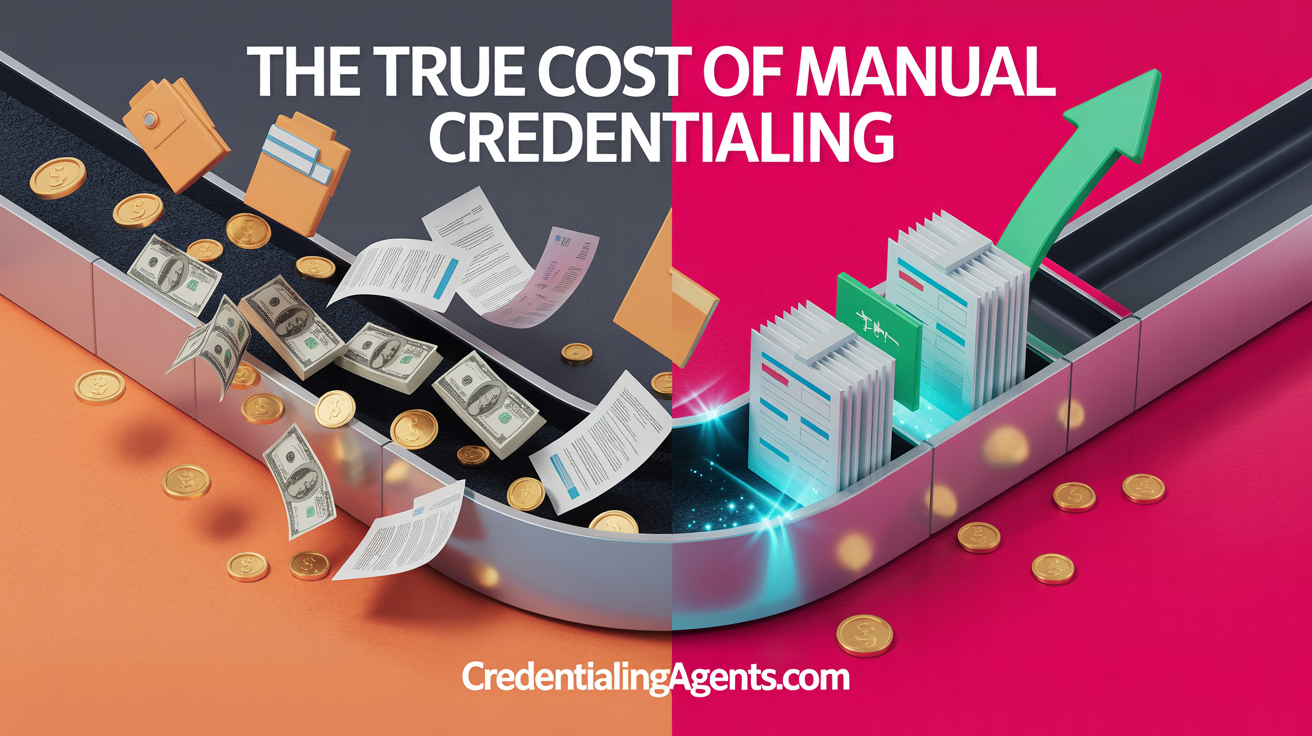
Every day of delay costs money. Every missed expiration creates compliance risk. Every overworked credentialing specialist is one resignation letter away from chaos.
What AI Credentialing Actually Looks Like
Modern AI-powered credentialing platforms aren't just digitized versions of paper processes. They fundamentally reimagine the workflow:
1. Intelligent Document Intake
Clinicians upload documents once—via mobile app, email, or text. AI extracts key data (license numbers, expiration dates, names, addresses) automatically, with 99%+ accuracy. No more manual data entry.
2. Automated Primary Source Verification
The system queries state nursing boards, DEA databases, NPDB, OIG exclusion lists, and other primary sources automatically. What used to take days of phone calls happens in minutes.
3. Predictive Expiration Management
Instead of reactive "oh no, their license expired yesterday" alerts, AI systems predict credentialing gaps 90-180 days out and automatically initiate renewals with clinicians.
4. Continuous Compliance Monitoring
Background checks, sanctions monitoring, and license verification happen continuously—not just at initial credentialing. If a clinician's status changes, you know immediately.
5. Facility-Specific Checklist Generation
When a clinician is submitted to a new facility, the system automatically generates the facility's specific credentialing requirements and identifies any gaps—before submission.
The ROI Reality Check
The math is compelling:
| Metric | Before AI | After AI |
| Time to credential | 14-28 days | 3-7 days |
| Credentialing staff per 100 active clinicians | 2-3 | 0.5-1 |
| Compliance incidents per year | 5-15 | 0-2 |
| Expired credential placements | 3-5% | <0.5% |
For a mid-size healthcare staffing agency placing 500 clinicians annually, that's:
- $200,000+ in recovered revenue from faster placements
- $150,000+ in labor savings from reduced manual work
- Incalculable risk reduction from eliminating compliance gaps
What's Holding Agencies Back?
If the ROI is so clear, why hasn't everyone adopted AI credentialing already?
1. "We've always done it this way" Credentialing teams are often isolated from technology decisions. The CFO sees credentialing as a cost center, not an innovation opportunity.
2. Integration concerns Agencies worry about connecting new systems to existing ATS/VMS platforms. Modern solutions address this with API-first architecture and pre-built integrations.
3. Change management paralysis Credentialing specialists fear automation means job loss. In reality, it means doing higher-value work—relationship building, complex case handling, quality assurance—instead of data entry.
4. Vendor confusion The market is crowded with solutions ranging from simple document storage to true AI-powered automation. Agencies struggle to evaluate what's real vs. marketing hype.
The Competitive Reality
Here's the uncomfortable truth: your competitors are already doing this.
The large national healthcare staffing firms have invested millions in proprietary credentialing automation. They're placing clinicians faster, with fewer compliance incidents, at lower cost.
If you're still running on spreadsheets and fax machines, you're not just inefficient—you're losing deals to agencies that can credential in days instead of weeks.
The good news? AI credentialing tools are no longer enterprise-only. Solutions built specifically for small and mid-size healthcare staffing agencies are now accessible, affordable, and fast to implement.
Making the Transition
If you're ready to modernize your credentialing operations, here's where to start:
Audit your current process: Map every step from candidate acceptance to cleared-for-placement. Where are the bottlenecks?
Calculate your true cost: Include labor, opportunity cost of delays, and compliance risk—not just software subscriptions.
Evaluate vendors carefully: Ask for demos with your actual documents. Test OCR accuracy. Verify integration capabilities with your existing systems.
Plan for change management: Involve your credentialing team early. Show them how automation elevates their role, not eliminates it.
Start with a pilot: Roll out with a subset of clinicians or one credential type before full deployment.
The Bottom Line
Healthcare staffing is in a margin squeeze. Labor costs are up. Competition is fierce. The agencies that thrive will be the ones that eliminate operational friction—and credentialing is the biggest friction point most agencies have.
AI credentialing isn't futuristic anymore. It's table stakes.
The only question is whether you'll lead the revolution or be left behind.
Ready to see AI-powered credentialing in action? Credentialing Agents automates the entire credentialing lifecycle for healthcare staffing agencies—from document intake to continuous compliance monitoring. Book a demo to see how we can cut your time-to-placement by 70%.