Allied Health Credentialing: The Forgotten Frontier That Could Cost Your Staffing Agency Millions

Everyone talks about travel nursing. The industry obsesses over locum tenens physicians. But while staffing agencies fight over these high-profile placements, a $25 billion market segment sits criminally underserved: allied health professionals.
Physical therapists. Respiratory therapists. Lab technicians. Radiology techs. Speech-language pathologists. Occupational therapists. These clinicians represent roughly 40% of the healthcare workforce—yet most staffing agencies treat their credentialing as an afterthought.
That is a catastrophic mistake.
The Allied Health Boom Nobody Prepared For
The Bureau of Labor Statistics projects allied health occupations will grow 15-25% through 2032, outpacing nearly every other healthcare segment. Hospital systems are desperate. Outpatient clinics are competing for talent. Skilled nursing facilities cannot find qualified staff.
As Barry Asin, Chief Analyst at Staffing Industry Analysts (SIA), has consistently noted in industry reports, the healthcare staffing market continues to diversify beyond nursing—and agencies that fail to build infrastructure for allied health specialties will lose ground to competitors who do.
The opportunity is massive. So is the credentialing complexity.
Why Allied Health Credentialing Is Uniquely Challenging
1. Fragmented Licensure Requirements
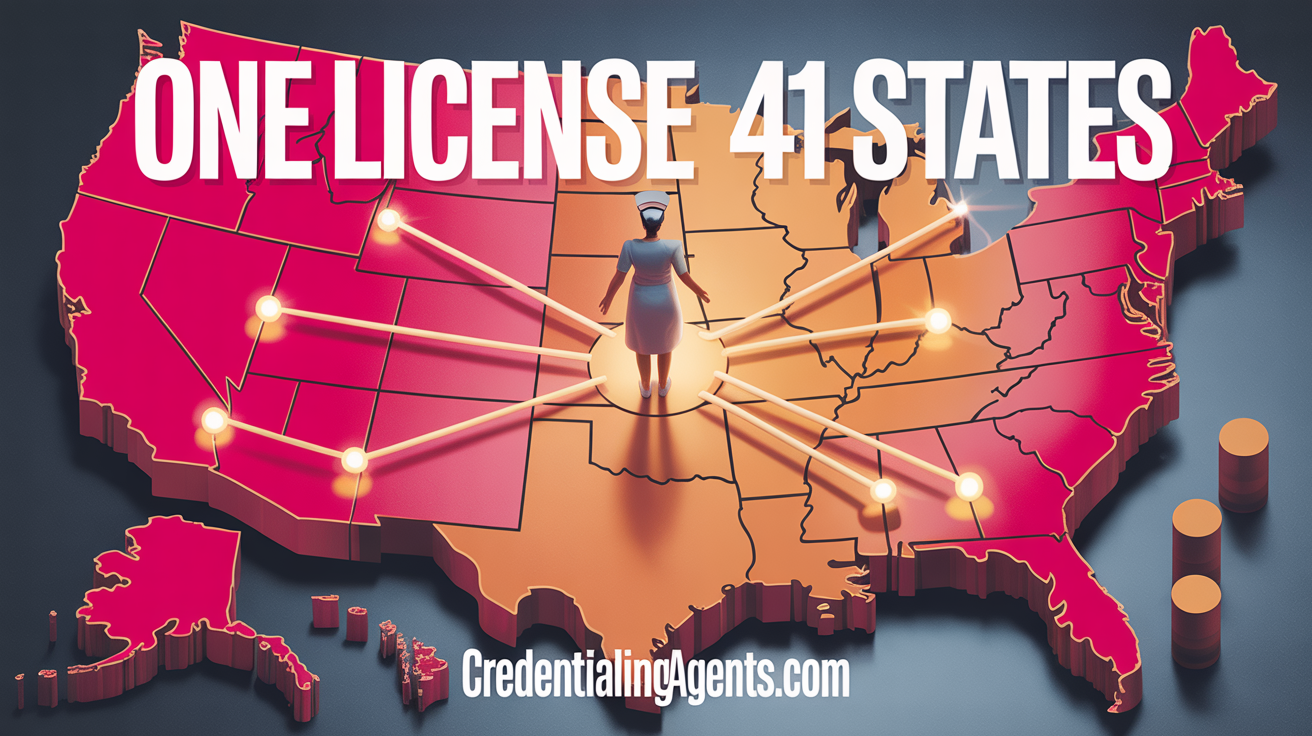
Unlike nursing with the Nurse Licensure Compact, most allied health professions have no multi-state licensure agreements. A physical therapist licensed in Texas must obtain separate credentials for every state where they want to practice. Some states require jurisprudence exams. Others mandate supervised practice hours. A few have reciprocity agreements with specific states—but not others.
For staffing agencies, this means tracking dozens of different state requirements across multiple professions simultaneously.
2. Specialty Certifications Multiply Complexity
A respiratory therapist is not just a respiratory therapist. They might hold:
- Registered Respiratory Therapist (RRT) certification
- Neonatal/Pediatric Specialist (NPS) credential
- Adult Critical Care Specialist (ACCS) certification
- Sleep Disorders Specialty (SDS) credential
Each certification has its own renewal cycle, continuing education requirements, and primary source verification pathway. Multiply this across physical therapy specializations, laboratory science subspecialties, and radiology modalities—and credentialing becomes exponentially more complex.
3. Facility-Specific Privileging Requirements
Hospitals do not treat allied health privileging uniformly. One facility might require a radiology technologist to complete competency validation for each imaging modality. Another might accept national certification as sufficient. A third might require direct observation by existing staff before granting privileges.
Your credentialing team must understand not just licensure requirements, but the specific privileging criteria for every facility in your network.
The Hidden Costs of Allied Health Credentialing Failures
Revenue Leakage from Placement Delays
Allied health placements often fill shorter assignments than nursing—4 to 8 weeks is common. When credentialing delays push start dates back by 10-14 days, you might lose 25% of billable hours on that assignment. At $75-150/hour bill rates, delays destroy margins.
Lost Candidates to Faster Competitors
Allied health professionals have options. If your credentialing process takes three weeks and a competitor closes in ten days, you will lose that candidate—and likely lose them permanently.
Compliance Exposure from Credential Gaps
Joint Commission and state health departments do not distinguish between nursing and allied health credential failures. An expired certification or missed competency validation creates the same survey findings, the same corrective action plans, and the same reputational damage.
Building an Allied Health Credentialing Engine
Map Every Profession to Every State
Create a comprehensive matrix documenting licensure requirements by profession and state. Include:
- Initial licensure pathway
- Renewal requirements and cycles
- Continuing education mandates
- Background check requirements
- Any state-specific examinations
This is foundational work that most agencies skip—then scramble to figure out when a physical therapist in Michigan needs to work in Ohio next month.
Build Specialty Credential Tracking
Your system must track not just base licenses but specialty certifications. For each credential, capture:
- Issuing organization
- Expiration date
- CEU requirements for renewal
- Primary source verification pathway
Automate Competency Documentation
Allied health facilities increasingly require competency documentation beyond licensure. Build standardized skills checklists for each profession and track facility-specific competency requirements in your system.
Implement Proactive Expiration Management
Allied health professionals juggle multiple credentials with different expiration dates. Your system should alert both the clinician and your credentialing team 90, 60, and 30 days before any expiration—then escalate aggressively if renewal documentation is not received.
The Competitive Advantage Waiting to Be Claimed
Most healthcare staffing agencies approach allied health credentialing reactively. They credential when they get an order, scramble when requirements surprise them, and accept placement delays as inevitable.
Agencies that invest in systematic allied health credentialing infrastructure will:
- Close placements faster than competitors
- Maintain cleaner compliance records
- Build deeper relationships with allied health professionals who appreciate smooth processes
- Capture market share in a growing segment others are ignoring
The allied health market is not a sideshow. It is the next frontier.
Stop Treating Allied Health as an Afterthought
If your credentialing infrastructure was built for nursing and you are trying to force-fit allied health into the same workflows, you are leaving money on the table and creating compliance risk.
The agencies that will win in allied health are building purpose-built credentialing systems that handle the unique complexity of multi-profession, multi-state, multi-certification tracking.
Ready to transform your allied health credentialing operations? Credentialing Agents uses AI to automate the complexity of multi-profession credentialing—tracking licenses, certifications, competencies, and facility-specific requirements across your entire allied health workforce.
Stop letting allied health credentialing be your forgotten frontier. Make it your competitive advantage.