The Behavioral Health Credentialing Crisis: Why Mental Health Demand Is Outpacing Your Agency's Ability to Staff
America is facing an unprecedented mental health crisis. Demand for behavioral health services has surged over 40% since 2020, yet healthcare staffing agencies are struggling to fill positions—not because of a shortage of qualified professionals, but because of a credentialing process fundamentally mismatched to the complexity of behavioral health.
If your agency staffs psychiatrists, psychologists, licensed clinical social workers (LCSWs), or psychiatric nurse practitioners, you're already feeling this pain. The question isn't whether behavioral health credentialing is broken—it's whether your agency can fix it before your competitors do.
The Perfect Storm: Why Behavioral Health Is Different
Behavioral health credentialing isn't just harder than traditional nursing or physician credentialing—it's fundamentally different. Here's why:
Multi-Layered Licensure Requirements
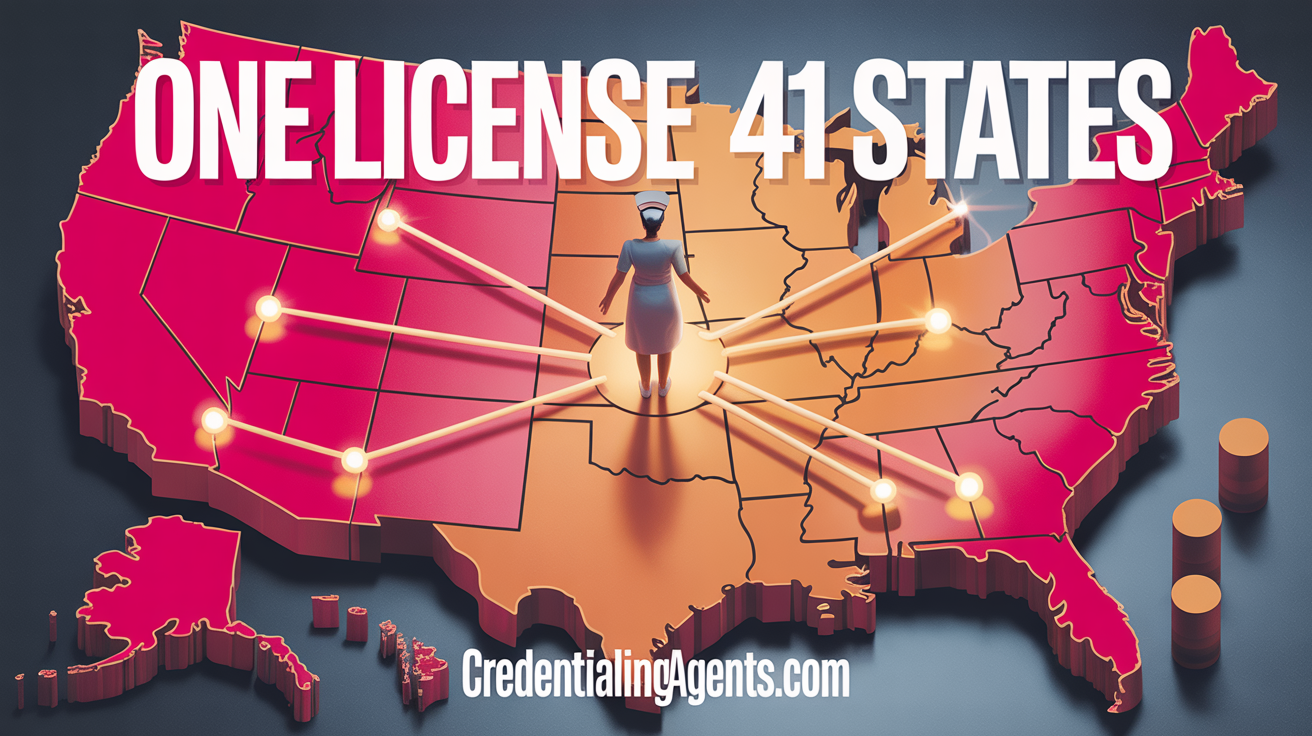
Unlike nurses operating under compact licensure across 40+ states, behavioral health professionals face a patchwork of state-specific requirements:
- Psychiatrists need both medical licensure AND DEA registration for controlled substances
- Psychologists face varying doctoral and supervision requirements by state
- LCSWs and LMFTs have inconsistent title protections and scope of practice rules
- Psychiatric NPs require collaborative practice agreements in many states
A travel nurse can work in dozens of states with one compact license. A licensed clinical social worker may need completely separate applications—and 8-12 week processing times—for each state.
Telehealth Complexity on Steroids
The telehealth explosion has been a lifeline for mental health access. But for staffing agencies, it's created credentialing chaos:
- Interstate telehealth requires active licensure in the patient's state, not just the provider's
- Psychology Interjurisdictional Compact (PSYPACT) only covers 45 states and has its own application process
- Medicare and Medicaid telehealth rules continue changing
- Payer credentialing requirements vary by state AND by insurer
One behavioral health provider doing multi-state telehealth can require 10+ separate credentialing files.
The Supervision Documentation Trap
Most behavioral health licenses require documented supervision hours—often spanning years. Your agency needs to verify:
- Total supervision hours (typically 2,000-4,000)
- Supervisor credentials and license status at time of supervision
- Type of supervision (individual vs. group, direct vs. indirect)
- Clinical hours by setting and modality
This documentation is often incomplete, scattered across multiple employers, or held by supervisors who've retired or changed contact information.
The Real Cost: Behavioral Health Placements Lost
Let's quantify what credentialing delays mean for behavioral health staffing:
| Credential Type | Average Processing Time | Revenue Lost Per Week |
| Psychiatrist (multi-state) | 12-16 weeks | $15,000-25,000 |
| Psychologist (PSYPACT) | 6-10 weeks | $5,000-8,000 |
| LCSW (new state) | 8-12 weeks | $3,000-5,000 |
| Psychiatric NP | 10-14 weeks | $8,000-12,000 |
For agencies staffing 50+ behavioral health professionals across multiple states, credentialing delays can mean $500K+ in annual lost revenue.
Worse, the providers get frustrated. The best behavioral health candidates have options. A 14-week credentialing delay isn't just lost revenue—it's lost talent to a competitor who moves faster.
The Payer Enrollment Double-Bind
Here's where it gets truly painful: state licensure is only half the battle.
Before a behavioral health provider can see insured patients, they need payer enrollment—a completely separate credentialing process for Medicare, Medicaid, and each commercial insurer.
Payer enrollment timelines:
- Medicare: 60-90 days (if everything is perfect)
- Medicaid: 30-120 days (varies wildly by state)
- Commercial payers: 30-180 days (each payer has different requirements)
For a psychiatrist starting at a new facility in a new state, you're looking at:
- State medical license (8-16 weeks)
- DEA registration (4-6 weeks, can overlap)
- Facility privileging (2-4 weeks)
- Medicare enrollment (8-12 weeks)
- Medicaid enrollment (4-16 weeks)
- Commercial payer credentialing (4-12+ weeks each)
Total time to full revenue generation: 4-6 months minimum.
No wonder behavioral health facilities are desperate and no wonder staffing agencies are leaving money on the table.
What's Actually Working: Strategies That Cut Time in Half
1. Parallel Processing Everything
The biggest mistake agencies make is sequential credentialing. Start ALL applications simultaneously:
- License application → Day 1
- DEA transfer → Day 1
- CAQH enrollment → Day 1
- Medicare enrollment → Day 14 (can submit before license arrives in most cases)
- Commercial payer applications → Day 14
Yes, you'll submit incomplete applications. You'll update them as credentials arrive. But you'll be weeks ahead of agencies who wait.
2. Build Supervision Documentation Upfront
Don't wait until a provider applies to request supervision verification. Build it into onboarding:
- Collect all supervision documentation during initial application
- Create a master verification file that travels with the provider's credentials
- Proactively reach out to supervisors before any state application
3. Invest in PSYPACT and Interstate Compacts
The Psychology Interjurisdictional Compact (PSYPACT) allows eligible psychologists to practice telehealth across 45 member states. For travel and telehealth-focused agencies, PSYPACT-credentialed psychologists are gold.
Similarly, the Counseling Compact is expanding rapidly. Track these developments—compact-credentialed providers are easier to place and generate faster revenue.
4. Automate Payer Enrollment Tracking
Payer enrollment is where most agencies lose weeks. Manual tracking doesn't scale when you're managing multiple providers across multiple states and multiple payers.
Automated systems that:
- Track application status across all payers
- Alert on missing documentation
- Re-submit automatically when payer systems bounce applications
- Flag expirations before they happen
...can cut payer enrollment time by 30-40%.
The AI Opportunity in Behavioral Health Credentialing
Behavioral health credentialing is complex—but complexity is exactly where AI shines.
Consider what's possible:
- Intelligent document parsing that extracts supervision hours from varied formats
- Cross-state requirement mapping that identifies the fastest path to multi-state practice
- Automated application pre-population using CAQH data
- Proactive gap identification that spots missing documentation before submission
- Payer enrollment orchestration across dozens of simultaneous applications
Agencies still managing behavioral health credentialing with spreadsheets and manual tracking are bringing a knife to a gunfight.
The Bottom Line
Behavioral health staffing represents one of the largest growth opportunities in healthcare. Demand is surging. Reimbursement rates for psychiatric services are increasing. Telehealth has unlocked geographic flexibility.
But only agencies that solve the credentialing puzzle will capture that growth.
The agencies that win will be those that:
- Understand the unique complexity of behavioral health credentialing
- Invest in parallel processing and automation
- Build documentation systems that scale
- Leverage AI to handle complexity at volume
The behavioral health credentialing crisis is real. The question is whether it's your obstacle—or your competitive advantage.
Ready to transform your behavioral health credentialing operations? Credentialing Agents helps healthcare staffing agencies automate the most complex credentialing workflows—including behavioral health. See how AI can cut your time-to-placement in half.