The Hidden Cost of Credentialing Delays: Why Every Day Costs Your Agency Money
The Hidden Cost of Credentialing Delays: Why Every Day Costs Your Agency Money
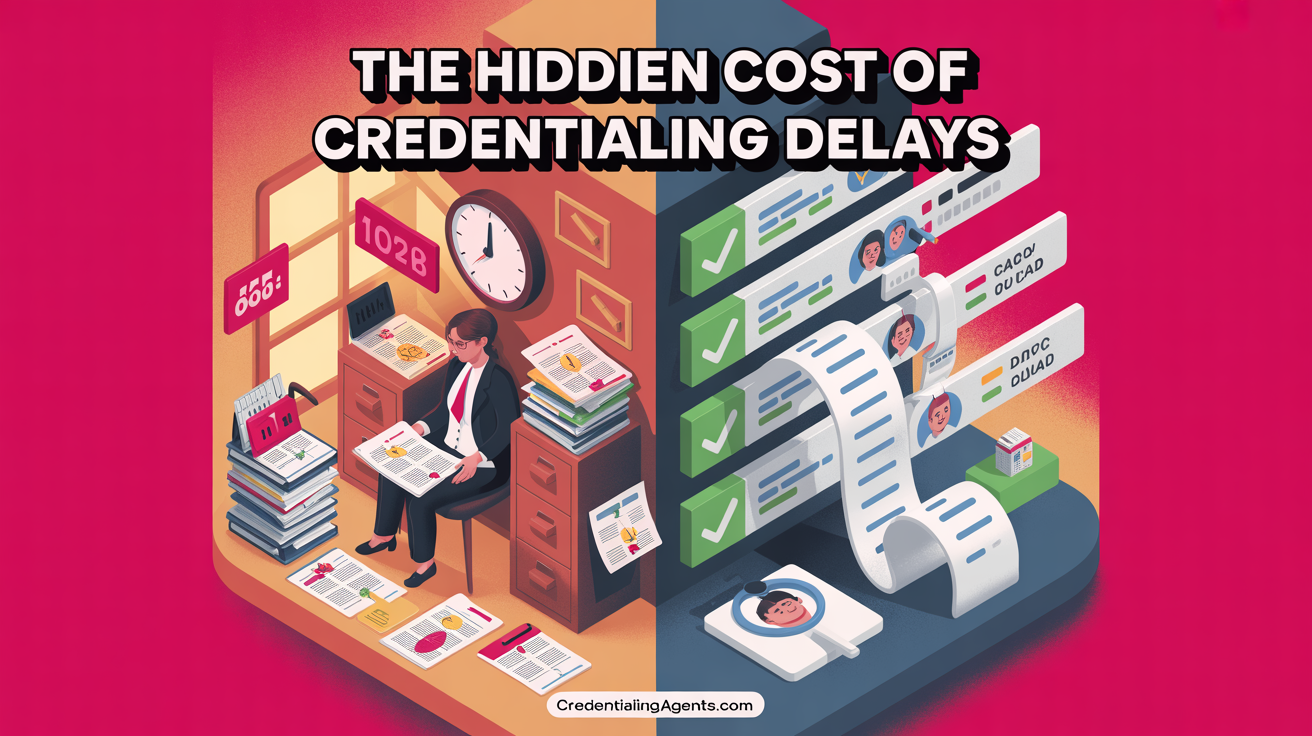
In healthcare staffing, time is money—literally. Every day a qualified nurse or clinician sits waiting for credential verification is a day of lost revenue, missed placements, and frustrated talent. Yet most agencies still treat credentialing as an administrative afterthought rather than the revenue-critical function it truly is.
Let's break down the real numbers behind credentialing delays and why forward-thinking agencies are turning to AI-powered solutions to stay competitive.
The Math Behind Every Delayed Credential
Consider a typical travel nurse placement:
- Average bill rate: $85-120/hour
- Average contract: 13 weeks at 36 hours/week
- Total contract value: $40,000-$56,000
Now consider that traditional manual credentialing takes 14-21 days on average. AI-powered credentialing can reduce this to 3-5 days.
That's 10-16 days of potential billing lost on every single placement. At even conservative rates, that's $3,000-$5,000 per hire evaporating before the nurse even starts their assignment.
The Compounding Problem
But the real damage isn't just one placement—it's systemic:
1. Talent Attrition
Top nurses have options. When your credentialing takes weeks while competitors clear them in days, they'll move on. One study found that 34% of healthcare professionals have abandoned a staffing agency due to slow onboarding.
2. Compliance Risk
Manual processes mean human error. Expired licenses slip through. Primary source verification gets delayed. One compliance violation can cost your agency its reputation—and its contracts.
3. Staff Burnout
Your credentialing coordinators are drowning in paperwork, chasing documents, and manually checking databases. High turnover in these roles means constant retraining and inconsistent results.
4. Opportunity Cost
While your team spends hours on routine verifications, they're not building relationships with facilities or finding new placements.
What AI-Powered Credentialing Actually Does
Modern AI credentialing platforms don't just digitize paper processes—they fundamentally reimagine the workflow:
- Automated primary source verification that runs 24/7
- Real-time license monitoring across all 50 states
- Intelligent document extraction that eliminates manual data entry
- Predictive expiration alerts that prevent compliance gaps
- Facility-specific checklist automation that matches requirements instantly
The result? What used to take weeks now takes days. What used to require a team of coordinators now runs automatically while your team focuses on revenue-generating activities.
The ROI Is Undeniable
Agencies implementing AI credentialing report:
- 60-80% reduction in time-to-clear
- 40% decrease in credentialing staff costs
- Near-zero compliance violations
- 25% improvement in nurse satisfaction scores
For a mid-sized agency placing 100 nurses per month, even conservative estimates show $300,000+ in recovered revenue annually from faster placements alone.
The Competitive Divide Is Growing
Healthcare staffing is evolving rapidly. Agencies still relying on spreadsheets, manual verification calls, and paper-based tracking aren't just inefficient—they're becoming uncompetitive.
The question isn't whether to modernize your credentialing. It's how quickly you can do it before the gap becomes insurmountable.
Ready to Eliminate Credentialing Delays?
Credentialing Agents uses purpose-built AI to automate healthcare credential verification, reduce compliance risk, and get your nurses working faster.
👉 See how it works at CredentialingAgents.com
Stop losing money to manual processes. Start placing nurses in days, not weeks.