The Hidden Cost of Credentialing Delays: Why Healthcare Staffing Agencies Are Losing Millions
Every day a nurse sits uncredentialed is revenue walking out the door. Here's how to stop the bleeding.

The Silent Revenue Killer in Healthcare Staffing
Every healthcare staffing agency knows the frustration: you've sourced a highly qualified travel nurse, the facility is desperate for coverage, the assignment is ready to start—but your nurse is stuck in credentialing limbo.
The average credentialing process takes 60-90 days. That's two to three months of billable hours evaporating while your competitors place their candidates faster.
But the true cost goes far beyond a single delayed placement.
The Math Nobody Wants to Face
Let's break down what credentialing delays actually cost your agency:
Direct Revenue Loss
- Average travel nurse bill rate: $85-120/hour
- Hours per 13-week contract: 468 hours
- Revenue per contract: $39,780 - $56,160
Every week of delay costs you roughly $3,400-$4,300 in lost revenue per nurse.
Compound Losses
- Candidate dropout: 23% of nurses accept other offers during lengthy credentialing
- Client frustration: Facilities with urgent needs move to faster agencies
- Staff burnout: Your credentialing team drowns in manual verification tasks
The Hidden Multiplier
When a nurse leaves for a competitor, you don't just lose one contract—you lose their entire potential lifetime value. A nurse who completes 3-4 contracts per year represents $150,000-$225,000 in annual revenue.
Why Traditional Credentialing Is Broken
The healthcare credentialing process was designed decades ago for a different era:
- Manual verification calls to licensing boards that operate on banker's hours
- Faxed documents that get lost in the shuffle
- State-by-state variations that require specialized knowledge
- Primary source verification bottlenecks that can take weeks
Meanwhile, demand for travel nurses has exploded. The same systems that worked for 50 placements per month collapse under 500.
The New Reality: AI-Powered Credentialing
Forward-thinking agencies are cutting credentialing time by 60-70% using intelligent automation:
- Automated license verification that runs 24/7 across all 50 states
- Smart document collection that chases missing items automatically
- Parallel processing that handles multiple verification streams simultaneously
- Expiration monitoring that prevents compliance gaps before they happen
What Fast Credentialing Actually Looks Like
Imagine this scenario:
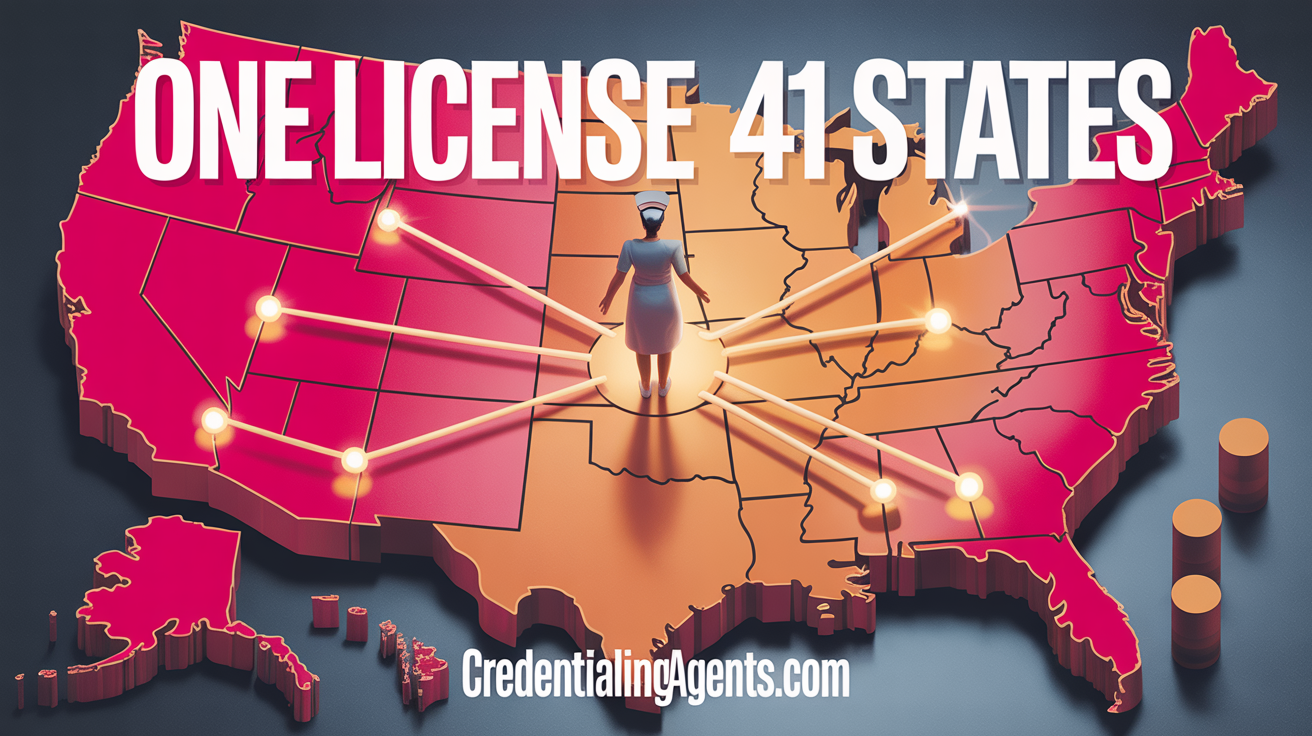
Day 1: Nurse applies, AI instantly verifies active licenses across all compact states
Day 2-3: Automated systems pull certifications, run background checks, verify employment history
Day 4-5: Smart document requests go out for any missing items, with automated follow-ups
Day 7-10: Facility-specific requirements completed, nurse cleared for orientation
Total time: Under two weeks instead of two months.
The Competitive Advantage You Can't Ignore
Agencies that credential faster:
- Win more contracts by being first to present qualified candidates
- Retain more nurses who don't have time to wait around
- Scale without adding headcount to their credentialing teams
- Reduce compliance risk with systematic verification processes
In a market where margins are tightening and competition is fierce, credentialing speed isn't just operational efficiency—it's a strategic weapon.
Stop Leaving Money on the Table
Every day you operate with manual credentialing processes is a day you're subsidizing your competitors' growth.
The technology exists to transform credentialing from a bottleneck into a competitive advantage. The only question is whether you'll adopt it before your competitors do.
Ready to see how AI-powered credentialing can transform your agency's speed-to-placement?
Visit CredentialingAgents.com to learn how leading healthcare staffing agencies are cutting credentialing time by 60% or more—without adding headcount.
Because in healthcare staffing, time literally is money.