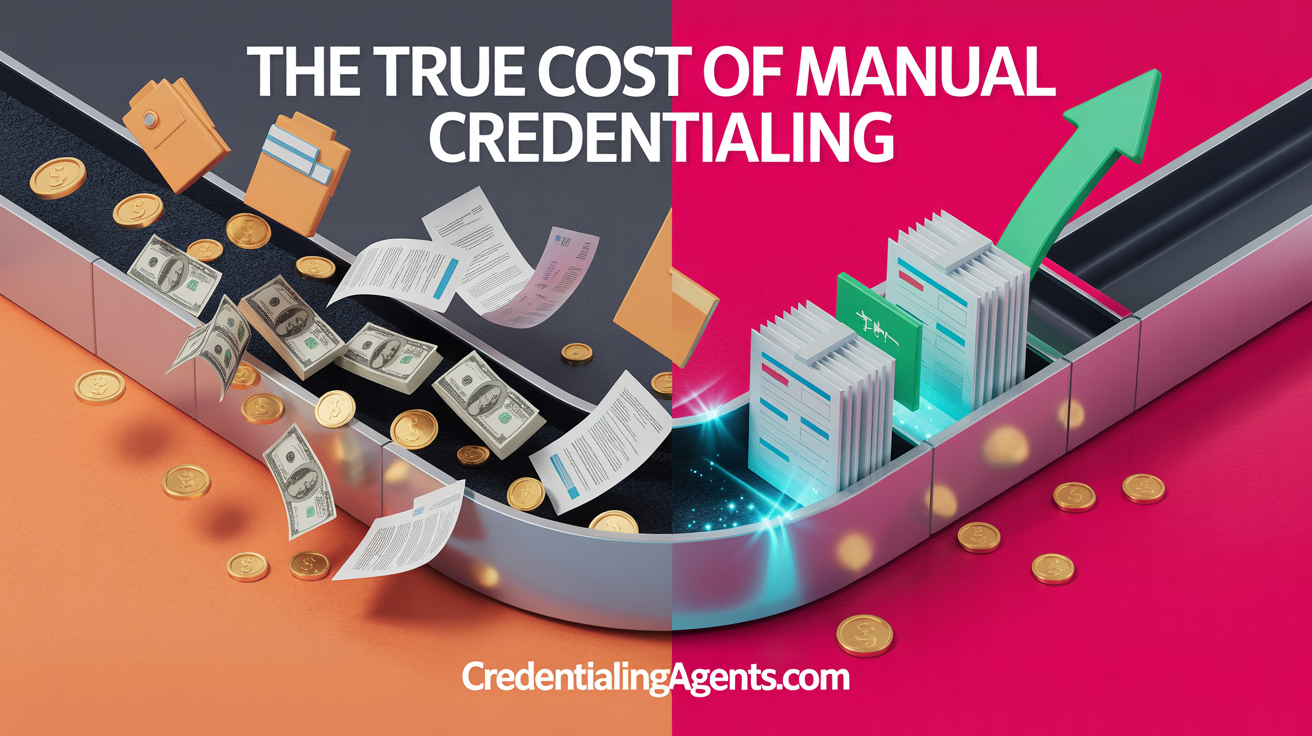
The Hidden Cost of Manual Credentialing: Why Healthcare Staffing Agencies Are Bleeding Time and Talent
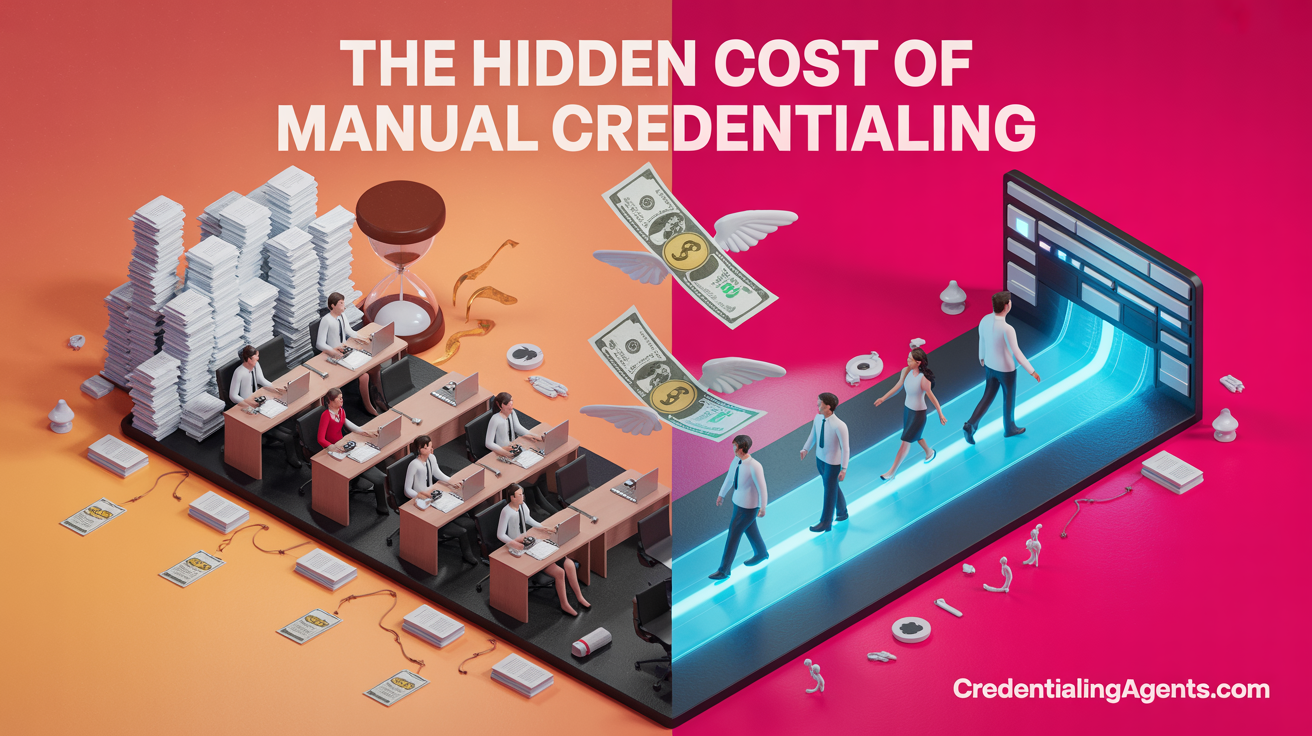
Every day your credentialing team spends manually chasing expired licenses, verifying certifications, and managing compliance documents is a day your competitors are placing nurses.
The math is brutal: the average healthcare staffing agency loses 15-20 billable hours per week on manual credentialing tasks that could be automated. At an average bill rate of $75/hour for a travel nurse, that's over $78,000 in potential revenue evaporating annually—per coordinator.
The Real Cost Isn't Just Time
Manual credentialing creates a cascading failure effect:
1. Delayed Placements When credential verification takes 5-7 days instead of hours, you're not just slow—you're last. Facilities work with agencies that can deploy qualified nurses fastest. Every day of delay is a contract going to your competitor.
2. Compliance Risk Human error in tracking expiration dates isn't a matter of if, it's when. One missed license renewal can mean pulled contracts, Joint Commission findings, or worse—patient safety incidents that destroy your reputation.
3. Coordinator Burnout Your best credentialing coordinators didn't sign up to be data entry clerks. When 70% of their day is spent on repetitive verification tasks, they leave. The average turnover cost for a credentialing specialist? $15,000-$25,000.
4. Scalability Ceiling Manual processes don't scale. Want to grow from 200 to 500 active travelers? You'll need to triple your credentialing staff—or watch quality collapse.
What AI-Powered Credentialing Actually Looks Like
Modern credentialing automation isn't about replacing your team—it's about giving them superpowers:
- Automatic primary source verification that checks licenses against state boards in real-time
- Intelligent document extraction that reads uploaded credentials and populates fields automatically
- Predictive expiration alerts that notify both coordinators AND nurses 90, 60, and 30 days before deadlines
- Compliance dashboards that show facility-specific requirements at a glance
- Integration with your ATS/VMS so credentialing data flows seamlessly into placements
The result? Agencies using AI credentialing report 60-80% reduction in time-to-clear and near-zero compliance gaps.
The Competitive Advantage Window Is Closing
Right now, AI-powered credentialing is a differentiator. Within 2-3 years, it will be table stakes. Agencies still running manual processes will be competing with one hand tied behind their back.
The staffing agencies winning in 2026 and beyond aren't the ones with the most recruiters—they're the ones with the fastest, most reliable credentialing engines.
Take the First Step
If your credentialing team is still drowning in spreadsheets and manual verifications, it's time to see what's possible.
Credentialing Agents is purpose-built AI for healthcare staffing credentialing. We help agencies cut credential verification time by 80% while maintaining bulletproof compliance.
👉 Book a demo at credentialingagents.com and see how much time (and money) you're leaving on the table.
Your nurses are ready to work. Your facilities are waiting. The only question is: how fast can you get them cleared?