How Long Does Healthcare Credentialing Actually Take? The Real Timeline (And How to Cut It in Half)
The hidden delays costing staffing agencies revenue—and how AI is changing the game
Every healthcare staffing agency knows the pain: you have a qualified nurse ready to work, a facility desperate for coverage, and a credentialing process standing between placement and revenue.
But how long should credentialing actually take? And more importantly—why does it always seem to take longer than it should?
The Industry Reality Check
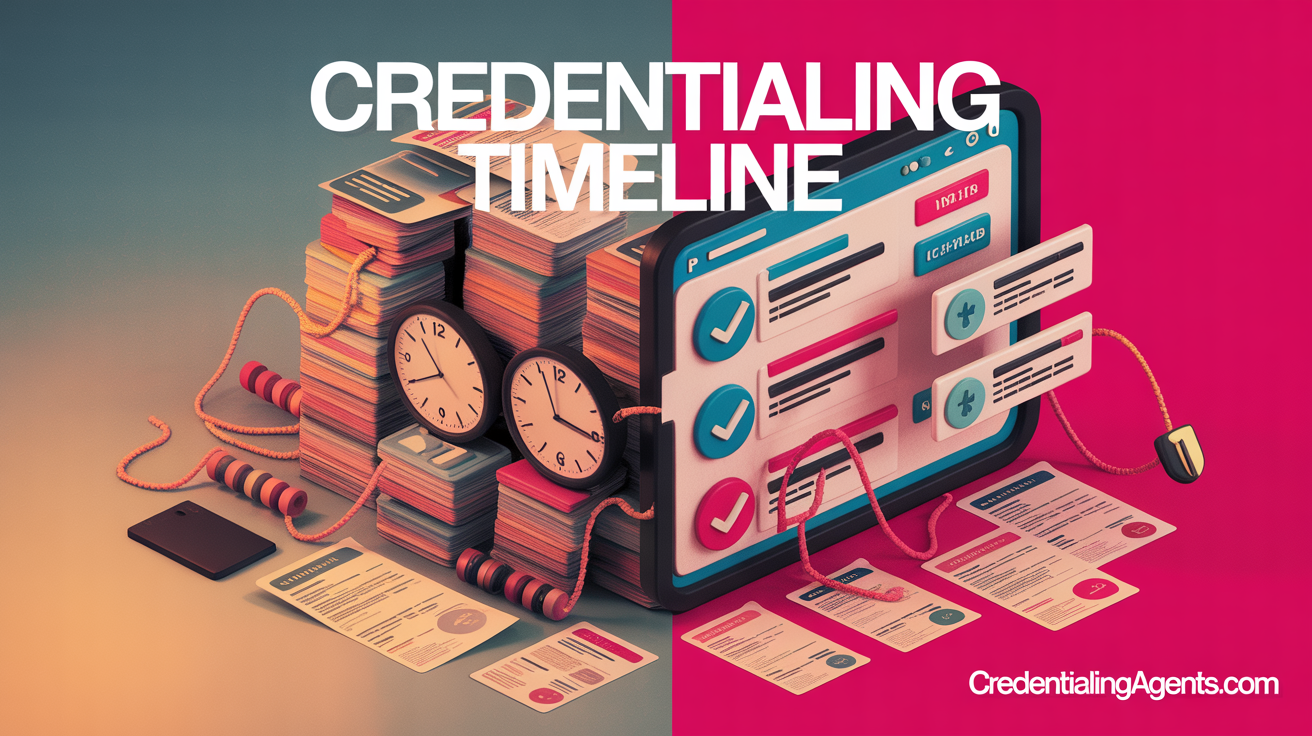
Let's get specific. Traditional healthcare credentialing timelines break down like this:
Primary Source Verification (PSV): 2-4 weeks
- License verification with state boards
- Education verification with institutions
- Employment history confirmation
- Certification validation
Background Checks: 1-2 weeks
- Criminal background screening
- OIG/SAM exclusion checks
- Drug screening coordination
Facility-Specific Requirements: 1-3 weeks
- Competency assessments
- Health screenings and immunizations
- Orientation scheduling
Total realistic timeline: 4-9 weeks
That's not a typo. Nearly two months from candidate submission to placement—in an industry where every day of delay costs real money.
The Hidden Costs Nobody Talks About
Here's what that timeline actually means for your bottom line:
Revenue delay: A travel nurse billing at $75/hour represents roughly $3,000 in weekly gross revenue. Four extra weeks of credentialing delay? That's $12,000 in postponed revenue per placement.
Candidate drop-off: Top talent doesn't wait. Industry data shows that 23% of qualified candidates accept competing offers during extended credentialing cycles. You're not just delaying revenue—you're losing it entirely.
Administrative burden: Your credentialing team spends 60% of their time on follow-ups, status checks, and chasing documents. That's not value-add work—it's process friction.
Where the Bottlenecks Actually Live
After analyzing thousands of credentialing workflows, the delays cluster in predictable places:
1. Primary Source Response Times
State licensing boards operate on their own timelines. Some respond in 24 hours. Others take three weeks. You have zero control over this—or do you?
2. Document Chase
Candidates submit incomplete files. Credentials expire mid-process. References go dark. Each gap triggers another round of follow-up emails and phone calls.
3. Multi-System Fragmentation
Your ATS doesn't talk to your credentialing software. Your credentialing software doesn't talk to your compliance database. Every handoff introduces lag and error potential.
4. Manual Verification Loops
Someone has to physically check that the license number on the application matches the license number on the state board website. Multiply that by 15-20 verification points per candidate.
The AI Credentialing Shift
Here's what's changing: intelligent automation is collapsing these timelines.
Modern AI-powered credentialing systems can:
Automate primary source verification by connecting directly to state boards, NPDB, OIG, and certification bodies—reducing PSV from weeks to hours.
Predict document gaps before they become blockers, prompting candidates for missing items proactively.
Monitor expiration dates continuously, triggering re-verification workflows before credentials lapse.
Unify data across systems, eliminating the manual handoffs that introduce delays and errors.
The result? Agencies using AI credentialing are seeing 50-70% reductions in time-to-clear.
What This Means for Your Agency
If your current credentialing timeline looks like the industry average (4-9 weeks), you're leaving money on the table. More importantly, you're giving competitors—those who've automated—a structural advantage.
The math is simple:
- Faster credentialing = faster placement
- Faster placement = faster revenue
- Faster revenue = competitive edge
The Bottom Line
Healthcare credentialing doesn't have to be a black hole of time and administrative burden. The technology exists today to cut your timelines dramatically—without sacrificing compliance.
The question isn't whether AI credentialing will become industry standard. It's whether you'll adopt it before or after your competitors do.
Ready to see what AI-powered credentialing looks like in practice?
Credentialing Agents is helping healthcare staffing agencies cut credentialing time by 50% or more. Book a demo to see how it works for your operation.