The Telehealth Credentialing Maze: Why Virtual Care Is Creating a Compliance Nightmare for Staffing Agencies

The pandemic didnt just accelerate telehealth adoption—it exposed a credentialing crisis that healthcare staffing agencies are still scrambling to solve.
Heres the uncomfortable truth: that physician you credentialed for in-person care in Texas? Theyre not automatically cleared to see patients via video in California. Or New York. Or any of the other 48 states with their own telehealth credentialing requirements.
The 50-State Problem Just Got Worse
Before 2020, telehealth was a niche. Now its a $60 billion industry—and every staffing agency is racing to place providers in virtual care roles. But heres what most agencies are discovering the hard way:
Each state has different rules for telehealth credentialing:
- Some require the provider to be licensed where the patient is located
- Others require licensure where the provider is located
- A handful require both
- Emergency waivers from COVID? Many have expired
The result? A single telehealth provider seeing patients in 15 states may need 15 separate credentialing files, each with state-specific requirements.
The Interstate Medical Licensure Compact Isnt Enough
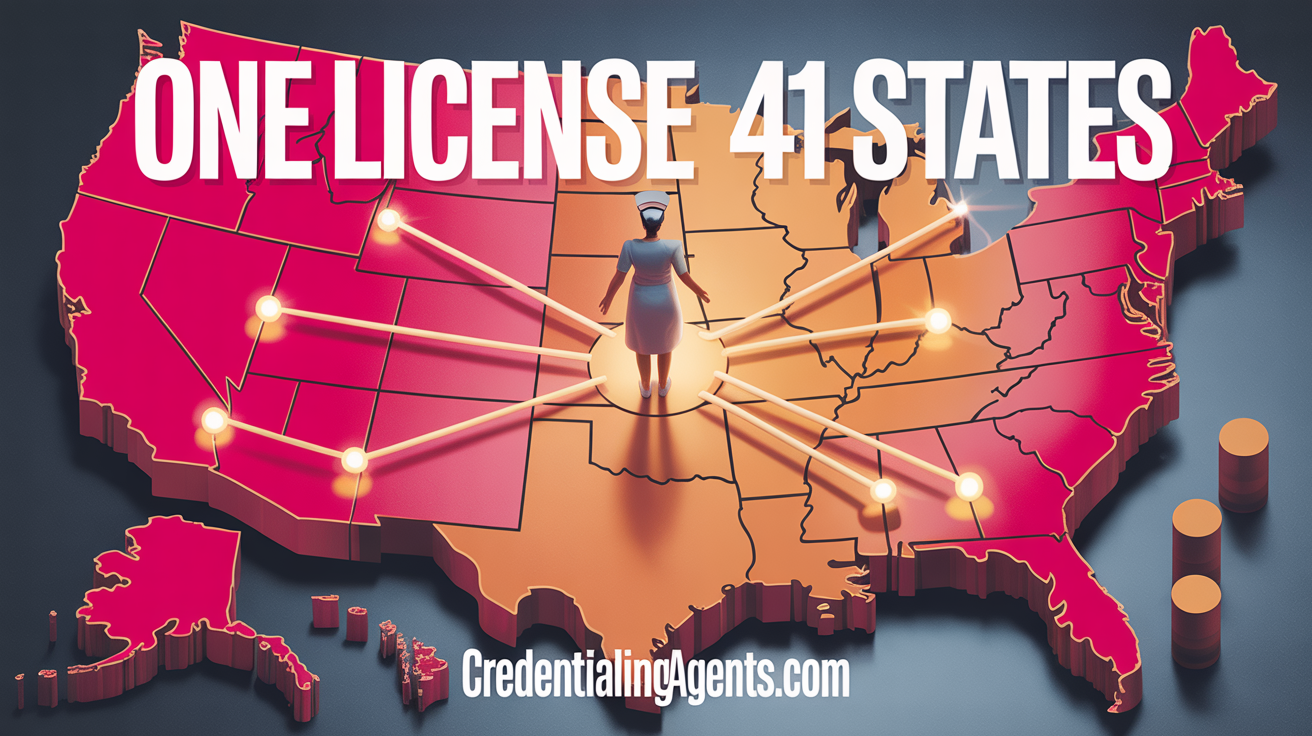
Yes, the IMLC helps physicians get licensed faster across 43 member states. But licensure isnt credentialing.
Your provider still needs:
- Facility-specific credentialing at each telehealth platform or health system
- Verification that their malpractice covers telehealth in each state
- Compliance with state-specific telehealth consent requirements
- Prescriptive authority verification (especially for controlled substances—hello, Ryan Haight Act)
The Hidden Costs Are Staggering
Were seeing agencies spend 3-4x more time credentialing a single telehealth provider compared to traditional placements. Why?
- Multiple facility relationships — One provider, five telehealth platforms, five credentialing packets
- Constant policy changes — States are still figuring out post-pandemic telehealth rules
- Technology verification — HIPAA compliance for home setups, equipment standards, connectivity requirements
- Cross-state malpractice gaps — Many policies dont automatically cover multi-state telehealth
Every day spent untangling this mess is a day your provider isnt generating revenue.
The Compliance Risks Are Even Worse
Place an under-credentialed provider in a telehealth role? Youre not just risking a compliance citation.
Youre risking:
- CMS billing denials for services rendered by improperly credentialed providers
- State medical board actions against both the provider AND your agency
- Malpractice exposure if something goes wrong and credentialing gaps are discovered
- Contract terminations from health systems with zero tolerance policies
One major health system recently audited their telehealth vendor network and found 23% of providers had credentialing deficiencies related to interstate practice.
The Solution: Automation Built for Virtual Care
Manual credentialing processes were never designed for the complexity of telehealth. Tracking 50 different state requirements, monitoring policy changes, managing multiple facility relationships—its impossible at scale without intelligent automation.
Thats exactly why we built Credentialing Agents.
Our AI-powered platform understands the nuances of telehealth credentialing:
- Multi-state license tracking with automated renewal alerts
- Facility-specific packet generation for each telehealth platform
- Real-time policy monitoring as states update telehealth rules
- Cross-state compliance verification to catch gaps before they become problems
The Telehealth Boom Isnt Slowing Down
Virtual care is projected to hit $185 billion by 2028. Health systems are building permanent telehealth programs. Providers want location flexibility.
The agencies that figure out telehealth credentialing will capture this market. The ones still doing it manually? Theyll be buried in compliance paperwork while competitors take the placements.
Ready to untangle your telehealth credentialing? Book a demo and see how AI can turn a 50-state nightmare into a streamlined process.
The future of healthcare staffing is virtual. Your credentialing process should be too.