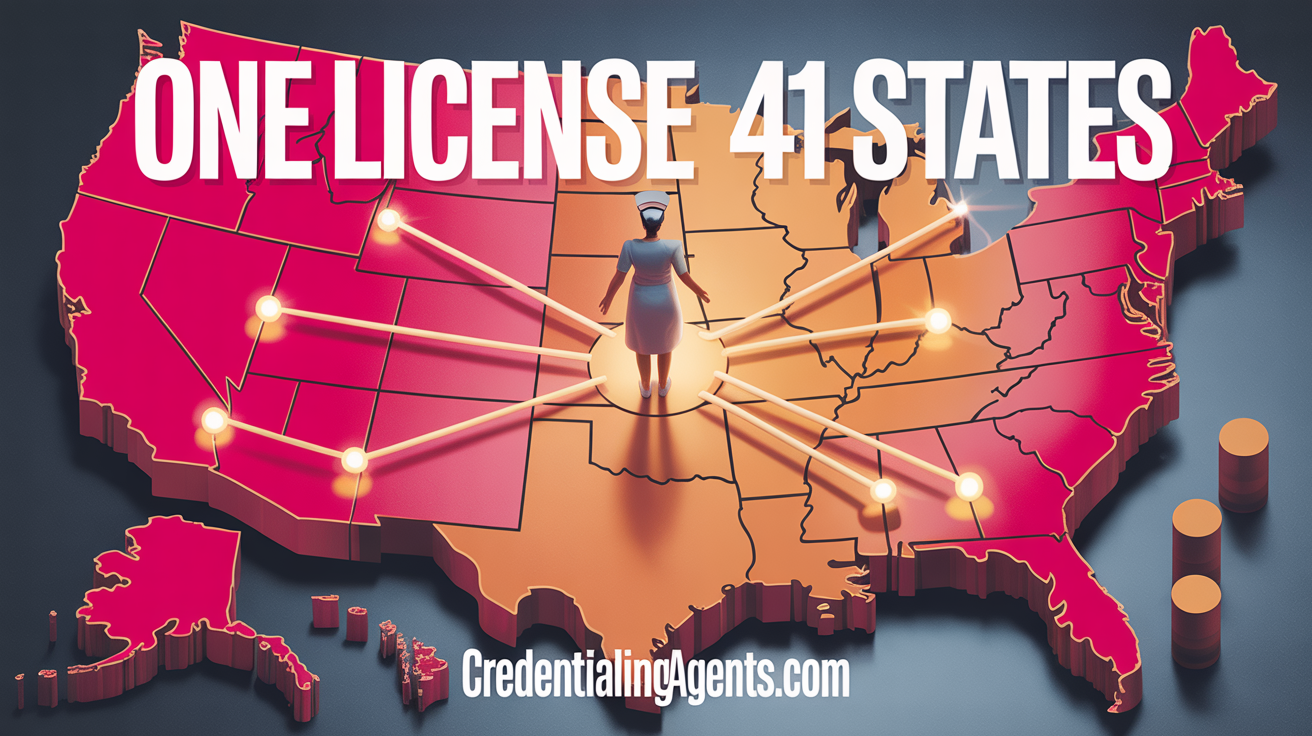
The 60-Day Drain: How Slow Credentialing Is Bleeding Healthcare Staffing Agencies Dry
Every healthcare staffing agency knows the feeling. A top-tier travel nurse is ready to work. The facility wants them. The pay rate is agreed. And then... the credentialing process begins.
60 days later, that nurse has taken a contract with a competitor. The facility has moved on. And your agency? Still waiting on primary source verifications.
This is the 60-Day Drain, and it's costing healthcare staffing agencies millions in lost revenue every single year.
The Math of Lost Opportunity
Let's break down what's actually happening:
- Average credentialing time: 45-90 days
- Average travel nurse weekly bill rate: $3,500
- Lost weeks per delayed placement: 4-8 weeks
- Revenue loss per candidate: $14,000 - $28,000
Now multiply that across your candidate pipeline. If you're processing 50 nurses per month and even 30% experience significant delays, you're looking at $210,000+ in monthly revenue leakage.
That's not a credentialing problem. That's a business crisis.
Why Traditional Credentialing Breaks Down
The bottlenecks are predictable:
Manual primary source verification - Your team is calling the same nursing boards, the same hospitals, the same certification bodies. Again and again.
Document chase fatigue - Candidates submit incomplete files. Your team follows up. They resubmit. Still incomplete. The cycle continues.
State license complexity - With nurses working across multiple states, tracking license status, renewals, and compact state eligibility becomes a spreadsheet nightmare.
Expiration blindspots - BLS expires in 3 days? That should have been flagged 30 days ago. Now you're scrambling.
The Facilities Are Watching
Here's what no one talks about: facilities are tracking your credentialing speed.
The VMS systems and MSPs that control healthcare staffing have data on which agencies deliver credentialed candidates fastest. Slow agencies get fewer orders. Fast agencies get preferred vendor status.
Credentialing speed is becoming a competitive advantage.
The agencies that figure this out are winning contracts. The ones that don't are wondering why their RFP win rates are declining.
AI Is Changing the Game
The agencies pulling ahead aren't hiring more credentialing specialists. They're deploying AI-powered credentialing automation.
Here's what modern AI credentialing looks like:
- Automated document extraction - Upload a nursing license photo, AI reads and verifies the data instantly
- Real-time license verification - Direct API connections to state boards and certification bodies
- Intelligent expiration tracking - Proactive alerts 60, 30, and 7 days before anything expires
- Candidate self-service portals - Nurses upload once, AI validates and organizes
- Primary source verification automation - What took days now takes hours
The result? Credentialing timelines shrinking from 60 days to under 2 weeks.
The Revenue Recapture Opportunity
Agencies implementing AI credentialing are seeing:
- 73% reduction in time-to-credential
- 4x faster candidate placement
- 89% decrease in credentialing-related candidate dropoff
- Revenue recapture of $150,000+ monthly for mid-size agencies
This isn't incremental improvement. It's a fundamental shift in operational capability.
What Smart Agencies Are Doing Now
The healthcare staffing agencies winning in 2026 are:
- Auditing their credentialing bottlenecks - Where exactly are candidates getting stuck?
- Measuring time-to-credential religiously - You can't improve what you don't track
- Investing in automation - Not as a "nice to have" but as core infrastructure
- Treating credentialing as revenue ops - Because that's exactly what it is
Stop the Drain
The 60-Day Drain isn't inevitable. It's a choice.
Every day you're running manual credentialing processes, you're choosing to leave revenue on the table. You're choosing to let competitors place candidates faster. You're choosing to keep your team buried in administrative work instead of relationship building.
The technology to fix this exists today.
Ready to plug the drain? Credentialing Agents uses AI to automate healthcare credentialing from end to end. See how agencies are cutting credentialing time by 73% and recapturing millions in lost revenue.