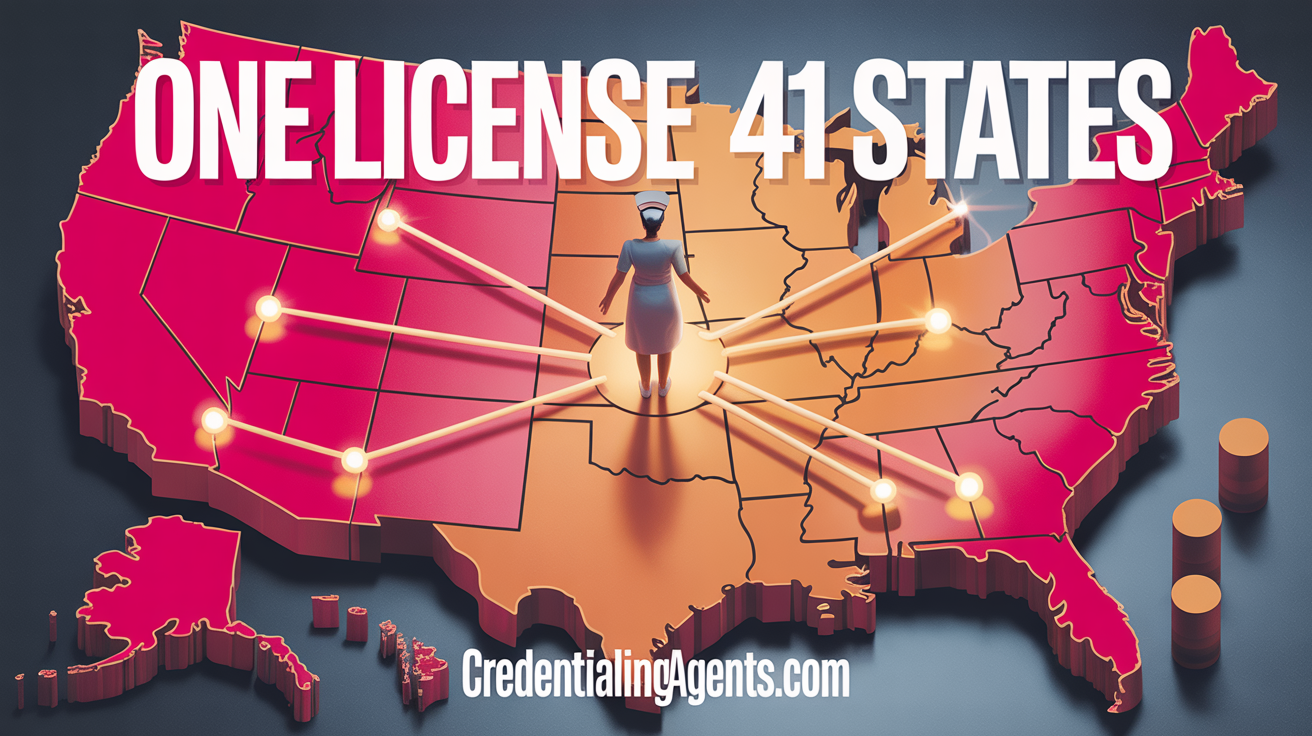
The 72-Hour Credentialing Bottleneck: Why Healthcare Staffing Agencies Lose $50K Weekly
How manual credential verification creates hidden revenue leaks—and what AI-powered solutions can do about it
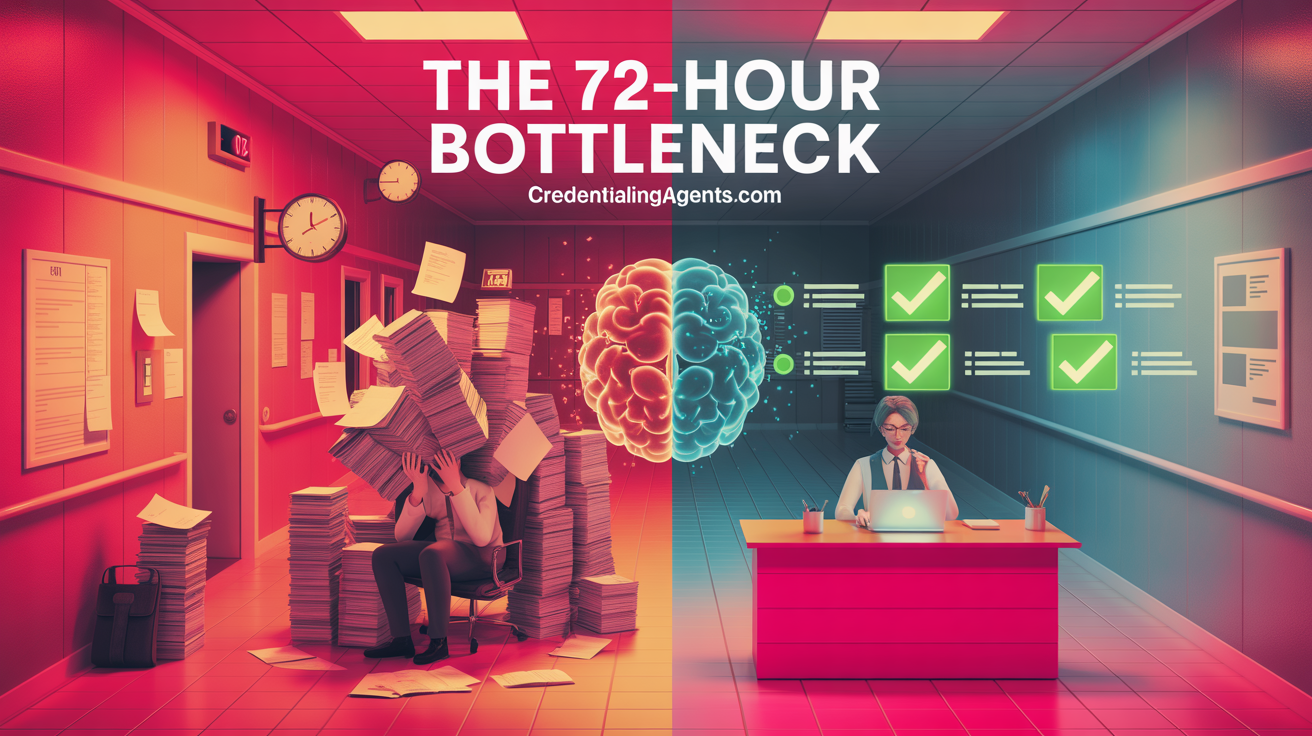
The 72-Hour Credentialing Bottleneck: Why Healthcare Staffing Agencies Lose $50K Weekly
Every healthcare staffing agency knows the drill: a hospital calls with an urgent need for three ICU nurses. You have qualified candidates ready to work. But between that call and boots on the ground? A credentialing gauntlet that can stretch from 72 hours to 72 days.
And every hour of delay costs real money.
The Math Behind the Bottleneck
Let's break down what credential verification delays actually cost:
- Average bill rate for travel nurse: $85-$125/hour
- Typical shift: 12 hours
- Delays per placement: 3-7 days average
- Lost revenue per delayed placement: $3,060-$10,500
For an agency placing 50+ nurses monthly, even a 3-day average delay translates to $150,000+ in monthly opportunity cost. That's $1.8 million annually—evaporating into the credentialing void.
Why Traditional Credentialing Fails
The traditional credentialing process is a relic of the fax machine era:
1. Primary Source Verification (PSV) Chaos
Every license, certification, and education record requires verification from the issuing source. That means:
- Calling state boards during limited business hours
- Waiting for email responses from nursing schools
- Chasing down references who don't return calls
- Manually entering data into multiple systems
2. The Multi-State Nightmare
Travel nurses often hold licenses in 5-10+ states. Each state has different:
- Verification portals (or no portal at all)
- Processing times
- Documentation requirements
- Renewal cycles
3. Expiration Tracking Gaps
Credentials expire. BLS certifications. State licenses. TB tests. Background checks. When one expires mid-assignment, the consequences cascade:
- Immediate removal from facility
- Compliance violations
- Potential contract penalties
- Damaged client relationships
The Hidden Cost: Candidate Drop-Off
Here's what the revenue math doesn't capture: candidate abandonment.
Top-tier nurses have options. When your credentialing process takes two weeks while a competitor closes in five days, guess who gets the placement?
Industry data suggests that 23% of qualified candidates abandon applications due to credentialing friction. That's nearly 1 in 4 potential placements walking out the door.
What AI-Powered Credentialing Changes
Modern credentialing platforms leverage AI to attack these bottlenecks systematically:
Automated Primary Source Verification
Instead of manual calls and emails, AI agents can:
- Query state board databases in real-time
- Parse verification responses automatically
- Flag discrepancies instantly
- Maintain audit trails without human intervention
Intelligent Document Processing
OCR and natural language processing can:
- Extract data from uploaded certificates
- Cross-reference against known formats
- Identify potential fraud or inconsistencies
- Auto-populate compliance checklists
Predictive Expiration Management
Machine learning models can:
- Track all credential expiration dates
- Send automated renewal reminders
- Predict processing times by state
- Prioritize urgent renewals
Multi-State License Synchronization
For Nurse Licensure Compact (NLC) states and beyond:
- Automatic compact privilege verification
- State-by-state requirement mapping
- Gap analysis for new state applications
The 72-Hour-to-24-Hour Transformation
Agencies implementing AI-powered credentialing are seeing dramatic improvements:
| Metric | Before | After |
| Average time-to-clear | 5-7 days | 24-48 hours |
| Manual verification calls/day | 50+ | <10 |
| Credential expiration misses | 8-12%/month | <1%/month |
| Candidate drop-off rate | 23% | 8% |
The math reverses: instead of losing $50K weekly, agencies recover that revenue—and then some.
Implementation Reality Check
Not all AI credentialing solutions are created equal. When evaluating options, look for:
- Direct integrations with state boards and verification sources
- Healthcare-specific training (generic OCR fails on medical documents)
- Compliance audit trails that satisfy Joint Commission and CMS requirements
- Scalability that handles surge hiring without bottlenecks
- Human-in-the-loop options for edge cases and exceptions
The Competitive Imperative
Healthcare staffing is a $50+ billion industry with razor-thin margins. The agencies that thrive in 2026 and beyond will be those that eliminate operational friction.
Credentialing is often the biggest friction point.
The question isn't whether to modernize your credentialing process—it's how fast you can do it before your competitors do.
Ready to Eliminate Your Credentialing Bottleneck?
Credentialing Agents uses AI-powered automation to transform healthcare credentialing from a weeks-long ordeal into a streamlined, 24-hour process.
Our platform handles primary source verification, document processing, expiration tracking, and compliance management—so your team can focus on what matters: placing great nurses in facilities that need them.
Book a demo at CredentialingAgents.com →
Keywords: healthcare credentialing automation, travel nurse compliance, primary source verification, AI credentialing software, healthcare staffing operations, nurse license verification, credential management system