The 72-Hour Credentialing Crisis: Why Speed Wins in Travel Nursing
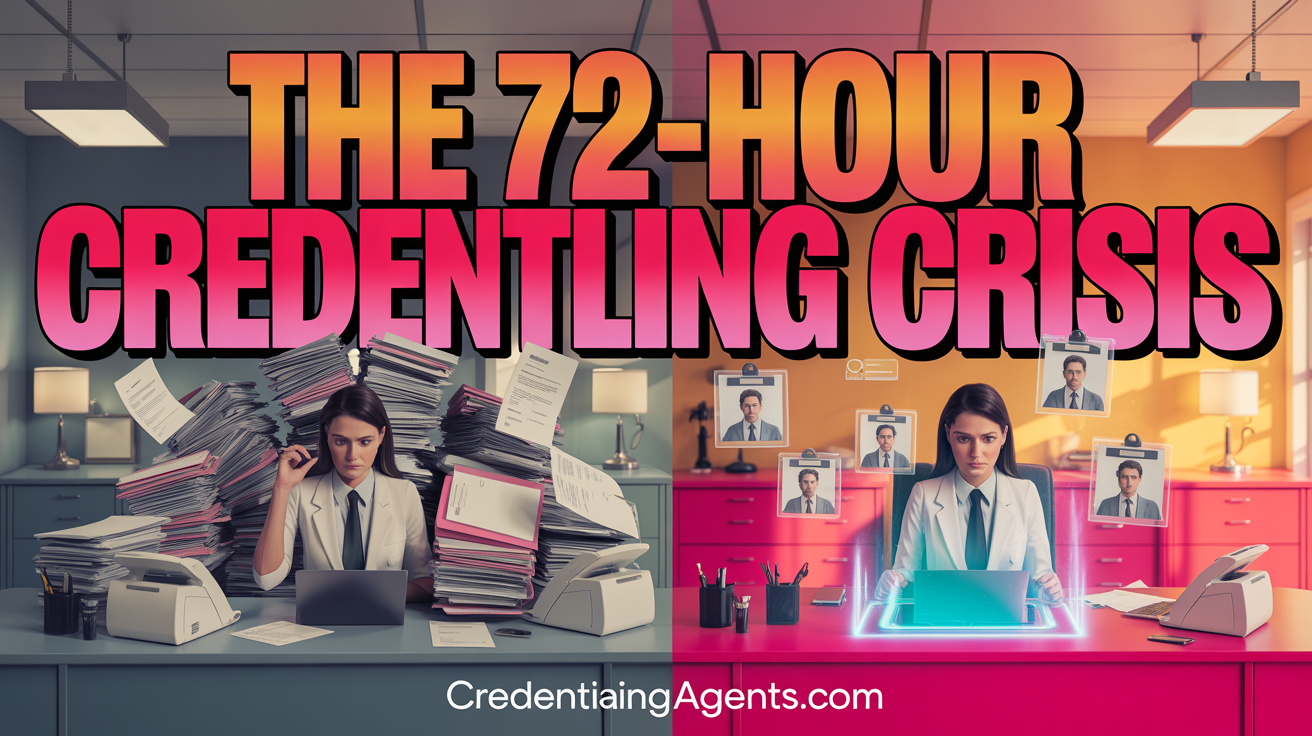
The 72-Hour Credentialing Crisis: Why Speed Wins in Travel Nursing
In travel nursing, timing is everything. A hospital has an urgent staffing gap. A qualified nurse is ready to fill it. But between that match and the nurse's first shift stands a gauntlet that has broken countless staffing agencies: credentialing.
The industry calls it the "72-hour window"—the critical period where hospitals make placement decisions. Miss that window, and your competitor gets the contract. Your nurse loses the assignment. Your agency loses revenue.
And yet, most agencies are still credentialing like it's 2005.
The Math That's Killing Your Margins
Let's get specific. The average travel nursing credential file contains:
- 15-25 documents requiring verification
- 8-12 primary sources to contact
- 3-5 state license checks
- Multiple certifications (BLS, ACLS, specialty certs)
- Background checks, drug screens, immunization records
- Skills checklists and competency assessments
Manual processing time? 12-21 days on average.
But here's what that timeline actually costs you:
- Lost placements: Hospitals won't wait. They move to the next agency.
- Nurse attrition: Top nurses go where they can start fastest.
- Staff burnout: Your credentialing coordinators are drowning.
- Compliance risk: Rushed manual processes create errors.
Why Traditional Credentialing Fails
The traditional credentialing workflow looks something like this:
- Nurse submits documents (often incomplete)
- Coordinator manually reviews each document
- Phone calls and faxes to primary sources
- Waiting. So much waiting.
- Document arrives. Re-review.
- Repeat steps 2-5 for every verification.
- Final audit before hospital submission.
Every step is a potential delay. Every delay is a potential lost placement.
And it's not your team's fault. They're working with systems designed for a different era—fax machines, paper files, spreadsheet trackers, and hope.
The AI Credentialing Revolution
What if credential verification happened in hours instead of weeks?
This isn't hypothetical. AI-powered credentialing platforms are now:
- Auto-extracting data from uploaded documents using computer vision
- Validating licenses directly against state board databases in real-time
- Flagging discrepancies before they become compliance issues
- Tracking expirations and triggering renewals automatically
- Generating audit-ready files with complete verification trails
The result? What took 15 days now takes 15 hours. Sometimes less.
What This Means for Your Agency
Faster credentialing doesn't just mean happier hospitals. It transforms your entire operation:
Higher fill rates: You're first to submit qualified candidates.
Better nurse retention: Nurses want to work with agencies that get them placed fast.
Reduced overhead: Your coordinators handle 3x the volume without burning out.
Improved compliance: AI doesn't miss expired certifications or skip verification steps.
Competitive differentiation: Speed becomes your selling point.
The Question Every Staffing CEO Should Ask
How many placements did you lose last month because credentialing took too long?
If you don't know the answer, that's a problem. If you do know and it's more than zero, that's a bigger problem.
The agencies winning in 2026 aren't the biggest or the oldest. They're the fastest. And speed starts with credentialing.
Ready to Eliminate Your Credentialing Bottleneck?
Credentialing Agents uses AI to automate primary source verification, license validation, and compliance tracking—cutting credentialing time by up to 90%.
Stop losing placements to slow processes. See how it works →