The Credentialing Speed Gap: Why Your Best Travel Nurses Are Signing with Competitors
How slow credentialing processes cost healthcare staffing agencies their top talent—and what AI-powered solutions can do about it
The Credentialing Speed Gap: Why Your Best Travel Nurses Are Signing with Competitors
In healthcare staffing, speed kills—but not in the way you might think. The agencies that credential fastest win the best nurses. Period.
Every day your credentialing team spends chasing down a missing TB test or waiting on primary source verification is a day your competitor is onboarding that same nurse. And in a market where top travel nurses have three offers on the table at any given time, the credentialing speed gap isn't just an operational inefficiency—it's an existential threat.
The Math Nobody Wants to Talk About
Let's be brutally honest about the numbers:
- Average time to credential a travel nurse: 2-4 weeks (industry standard)
- Time it takes a frustrated nurse to accept a competitor's offer: 48 hours
- Revenue lost per unfilled 13-week assignment: $15,000-$30,000
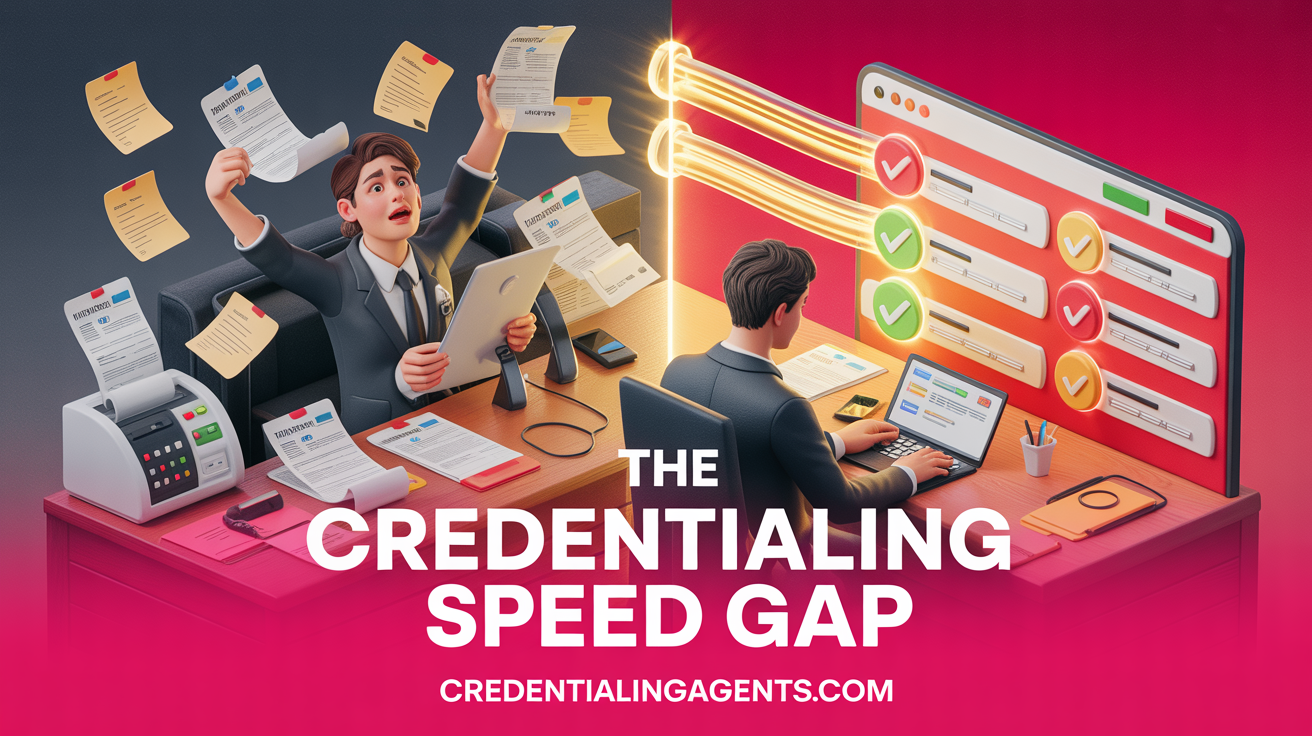
If your credentialing process takes 3 weeks and your competitor does it in 5 days, you're not competing. You're spectating.
Where the Bottlenecks Hide
After analyzing thousands of credentialing workflows, we've identified the five silent killers:
1. Primary Source Verification Lag
Manual PSV processes average 7-10 days. That's 7-10 days of a nurse wondering if they made the right choice. AI-powered verification can cut this to hours—not by cutting corners, but by automating the chase.
2. The Fax Machine Problem
Yes, it's 2026 and healthcare still runs on fax. But that doesn't mean your team should be manually monitoring fax queues. Smart OCR and automated routing turn faxed documents into structured data before your coordinator finishes their coffee.
3. State License Complexity
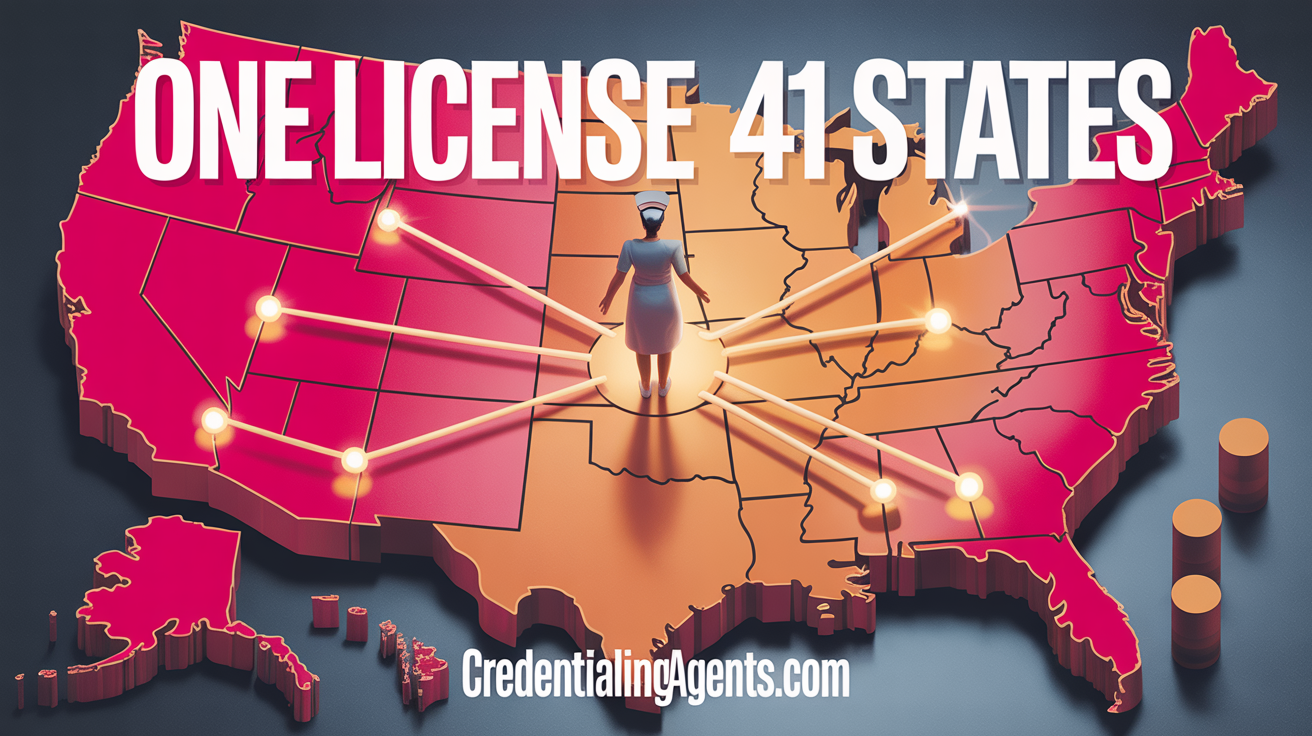
Compact licenses help, but with 41 states now in the Nurse Licensure Compact, tracking eligibility and processing multi-state verifications is more complex than ever. Automation handles the complexity; humans handle the exceptions.
4. Expiration Tracking Failures
Nothing kills a placement faster than a credential expiring mid-assignment. Proactive expiration management isn't a nice-to-have—it's table stakes.
5. Communication Black Holes
Nurses don't know where they stand. Coordinators don't know what's pending. Facilities don't know when to expect their traveler. Information silos create friction at every step.
The AI Advantage (Without the Hype)
Let's cut through the buzzwords. AI in credentialing isn't about replacing your team—it's about removing the soul-crushing manual work that causes burnout and delays.
What AI actually does well:
- Extracts data from any document format (even that blurry fax)
- Cross-references databases for primary source verification
- Flags inconsistencies before they become compliance problems
- Predicts expiration risks and triggers proactive outreach
- Keeps everyone informed with automated status updates
What AI doesn't do:
- Make judgment calls on edge cases
- Build relationships with nurses
- Navigate complex compliance scenarios
- Replace the human touch that matters
The agencies winning the credentialing speed race aren't replacing their teams with robots. They're giving their teams superpowers.
The Competitive Landscape Is Shifting
Here's what we're seeing in the market:
- Top-tier agencies are credentialing travel nurses in under 7 days
- Mid-market agencies are stuck at 2-3 weeks and losing ground
- Lagging agencies are wondering why their nurse retention is dropping
The gap is widening. Agencies that invest in credentialing automation now will compound their advantage. Those that wait will find themselves competing for the nurses nobody else wanted.
What Actually Moves the Needle
If you're serious about closing the credentialing speed gap, here's where to focus:
Audit your current timeline. Map every step from application to cleared. Where are nurses waiting? Where are coordinators stuck?
Identify your biggest bottleneck. Usually it's PSV or document collection. Fix that first.
Automate the automatable. Document extraction, verification requests, status updates, expiration alerts—machines do these better than humans.
Empower your team. Give coordinators tools that surface what needs attention, not dashboards they have to interpret.
Measure obsessively. Time-to-credential should be on your leadership dashboard, right next to revenue.
The Bottom Line
The credentialing speed gap is a competitive moat. Agencies that credential fast attract the best nurses, win the best contracts, and build reputations that compound over time.
The question isn't whether to invest in credentialing automation. The question is whether you'll do it before your competitors do.
Ready to close your credentialing speed gap? Credentialing Agents uses AI to automate primary source verification, document processing, and compliance tracking—helping healthcare staffing agencies credential nurses in days, not weeks.